Louisiana Passport is your guide to exploring the past and discovering the rich history of Louisiana. From Indigenous nations and early exploration to slavery, the Civil War, Reconstruction, civil rights, culture, and modern Louisiana, we explore the people, places, and events that shaped the state. Our goal is to provide engaging, original, and research-based stories that help readers better understand Louisiana’s remarkable past and its lasting impact on the present.
Louisiana the early years
-
![A black-and-white photo of a group of people, including children, standing in front of a thatched-roof wooden house in a rural setting with trees and bushes.]()
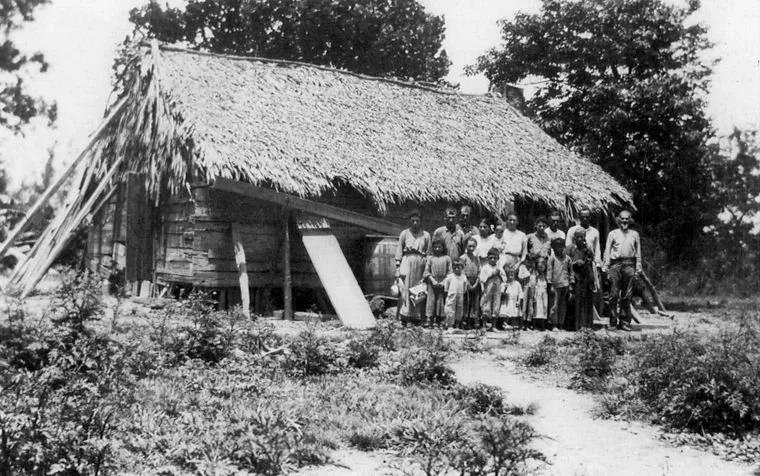
Indigenous Louisiana
Long before European colonization, Louisiana was home to diverse Indigenous nations with established communities and rich cultural traditions. The Caddo, Chitimacha, Houma, Tunica-Biloxi, and others developed agriculture, trade, and strong connections to the land.
-
![Historical portrait of a man dressed in armor with a sword, holding a scroll, set outdoors with trees in the background.]()
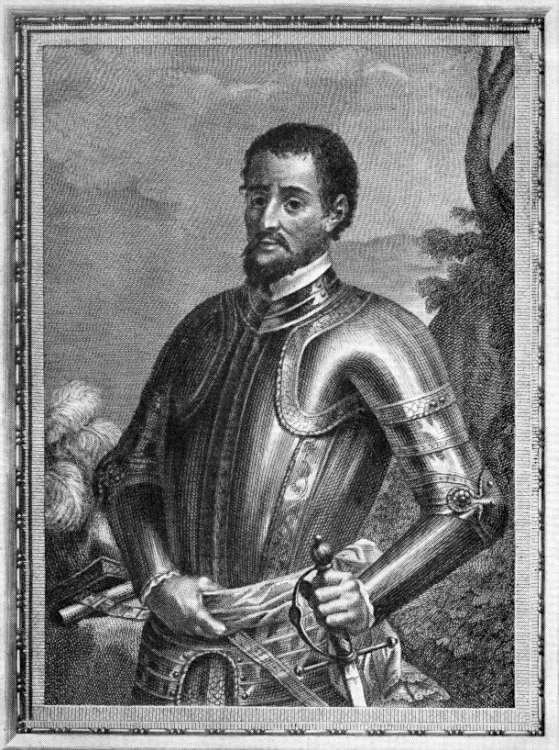
Hernando de Soto, 1541
De Soto’s expedition encountered Indigenous communities with established cultures, economies, and political systems. His journey became an important early chapter in the history of European exploration and Indigenous-European contact.
-
![Historical painting depicting European explorers or soldiers in colorful uniforms interacting with Indigenous people, with a forest and river in the background.]()
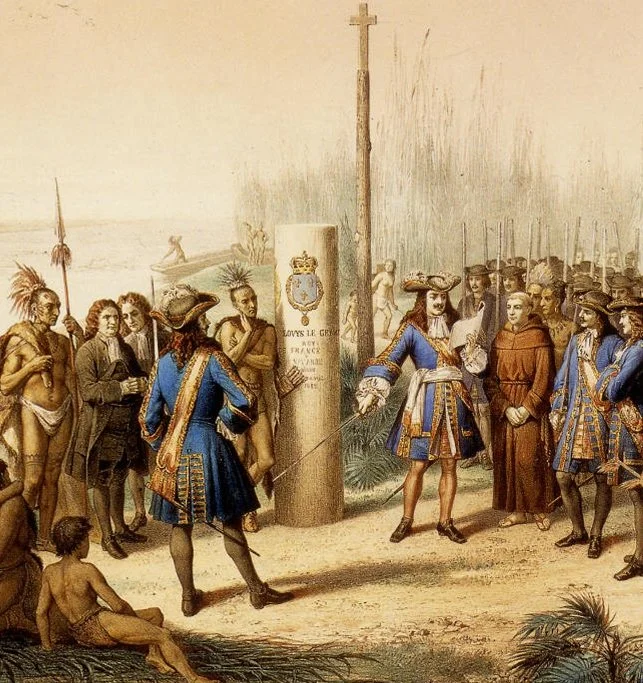
THE BIRTH OF LOUISIANA
René-Robert Cavelier, Sieur de La Salle, claimed the Mississippi River basin for France and named the territory Louisiana in honor of King Louis XIV. His expedition helped establish French ambitions in the region and shaped the future history of Louisiana.
-
![Portrait of a man from a historical painting, wearing armor and a medal, with long curly hair, standing near a body of water with a small boat in the distance.]()
BEGINNING OF FRENCH LOUISIANA
Read Now
Fort Maurepas, established by Pierre Le Moyne d’Iberville in 1699, marked the beginning of France’s lasting colonial presence in the lower Mississippi River region and laid the foundation for the future development of Louisiana.
-
![Historical map of New Orleans, Louisiana, showing city layout, streets, buildings, and the Mississippi River.]()
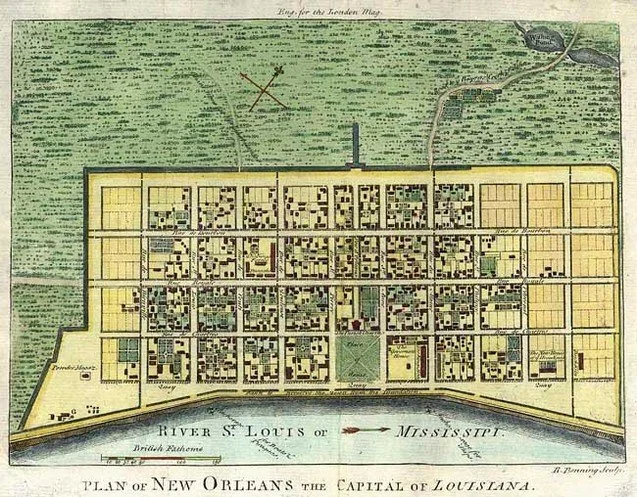
New Orleans French Capital
In 1722, New Orleans became the capital of French Louisiana, strengthening its role as the colony’s center of government, trade, and transportation. Its strategic location along the Mississippi River helped establish the city as a vital part of France’s North American empire.
-
![Historical document titled 'Code Noir' related to the rights and regulations concerning enslaved people in America, published in Paris in 1643.]()
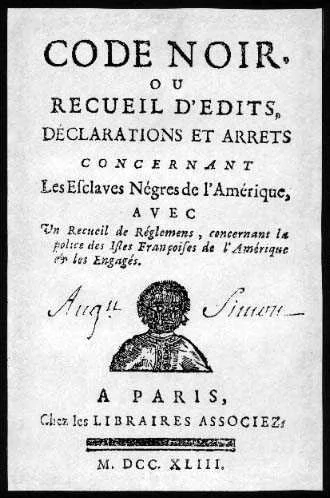
Code Noir in Louisiana
France issued the Code Noir, establishing a legal framework for slavery in French Louisiana. The code regulated the lives of enslaved people while strengthening the colonial system of racial slavery. It became an important part of Louisiana’s early legal and social history.
-
![A historical painting depicting a group of military leaders and officials in a formal room, gathered around a central figure signing a document.]()
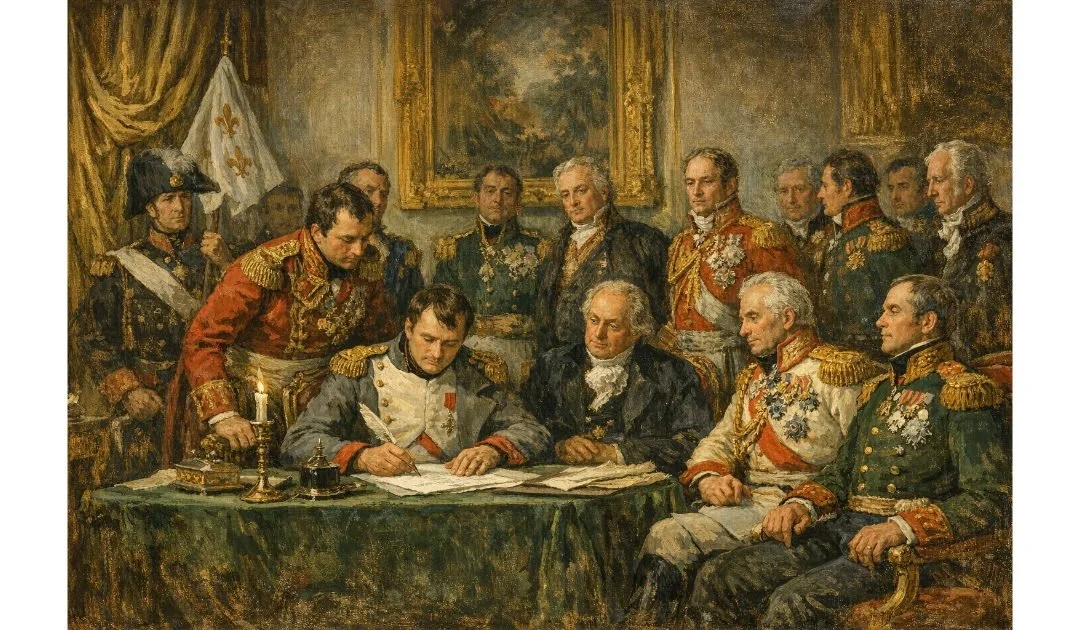
France Transfers Louisiana
In 1762, France secretly transferred Louisiana to Spain through the Treaty of Fontainebleau. The agreement ended French control and began the transition to Spanish rule, while French language, culture, and traditions remained deeply rooted in the colony.
-
![A historical painting depicting Native Americans and soldiers near a tipi, with soldiers on horseback and Native Americans gathered nearby, possibly during a battle or negotiation.]()
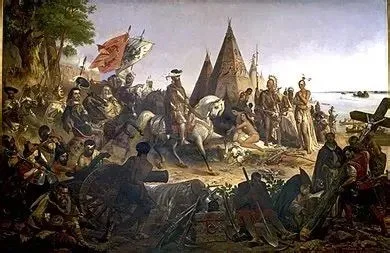
SPAIN TAKES CONTROL
Spain formally took control of Louisiana, beginning a new era of colonial rule. Spanish authorities introduced new laws and policies, French language, Catholic traditions, and left lasting influences on Louisiana’s culture, architecture, government, and identity.
-
![A sketch of African American men and women celebrating, holding American flags and musical instruments.]()
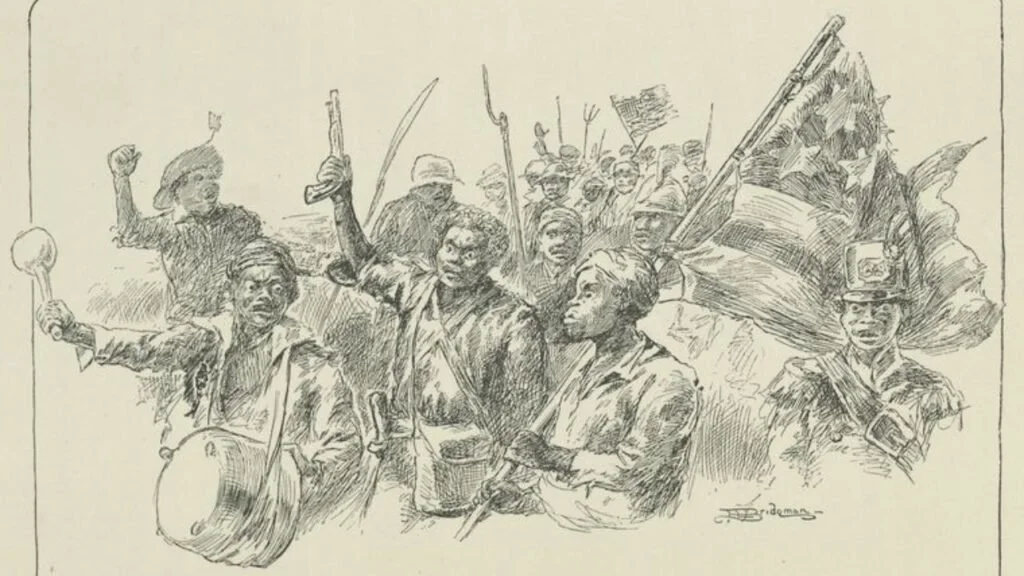
THE LOUISIANA REBELLION
The Louisiana Rebellion of 1768 was a brief uprising by French Creole elites who rejected Spanish rule and expelled Governor Ulloa. Spain reasserted control in 1769 under Alejandro O’Reilly, who punished the leaders and firmly established Spanish authority.
-
![A historical battle scene with soldiers engaged in combat, some wearing colonial-era uniforms and others with African-inspired clothing, with muskets and weapons, in front of a smoky background.]()
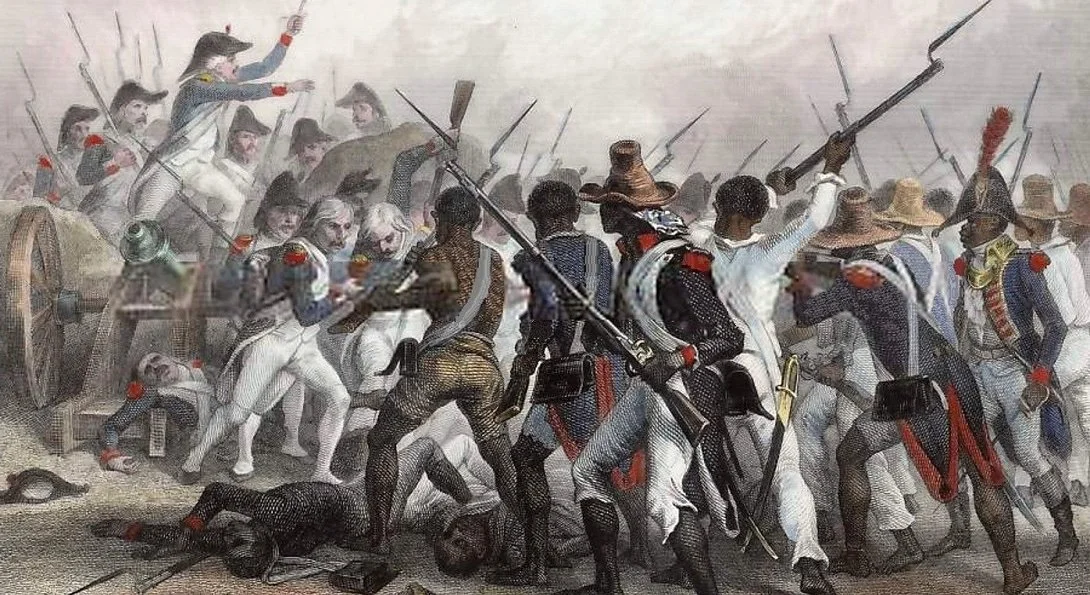
THE HAITIAN REVOLUTION
The Haitian Revolution sent waves of refugees from Saint‑Domingue into Louisiana, bringing white planters, free people of color, and enslaved Africans whose arrival reshaped the colony’s population and culture. Their presence strengthened Afro‑Creole traditions.
-
![Historical handwritten document with red wax seals at the bottom, written in elegant cursive script, appears to be in French or Spanish, inscribed on aged paper, displayed under glass.]()
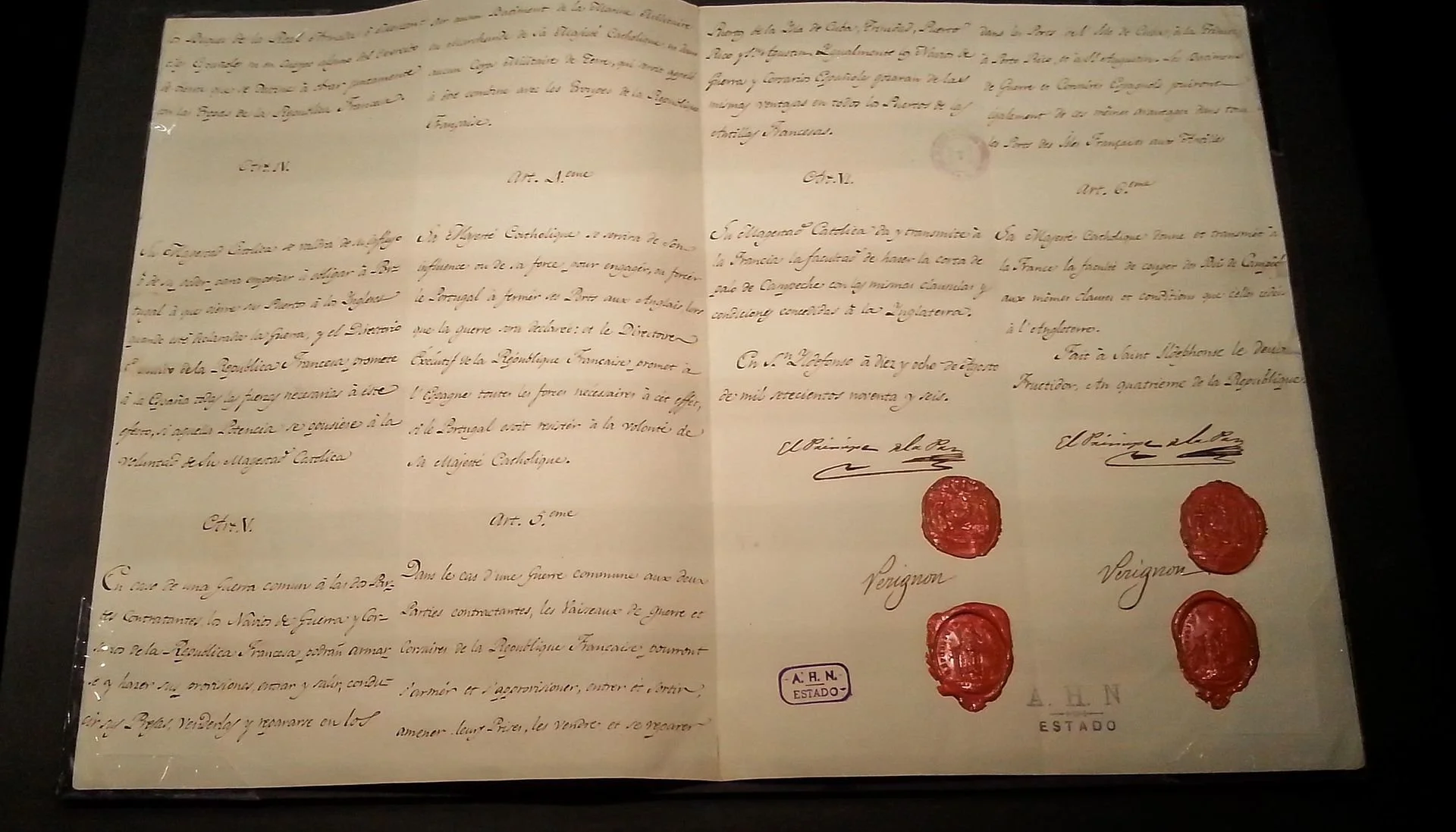
Louisiana Returned to France
Spain secretly returned Louisiana to France in 1800 through the Treaty of San Ildefonso, shifting the territory’s sovereignty while keeping Spanish officials in place. This quiet transfer set off the diplomatic chain that soon made the Louisiana Purchase possible.
-
![Historical meeting room with men in 18th-century military uniform gathered around tables, large window, and a map of Louisiana purchase on the wall.]()
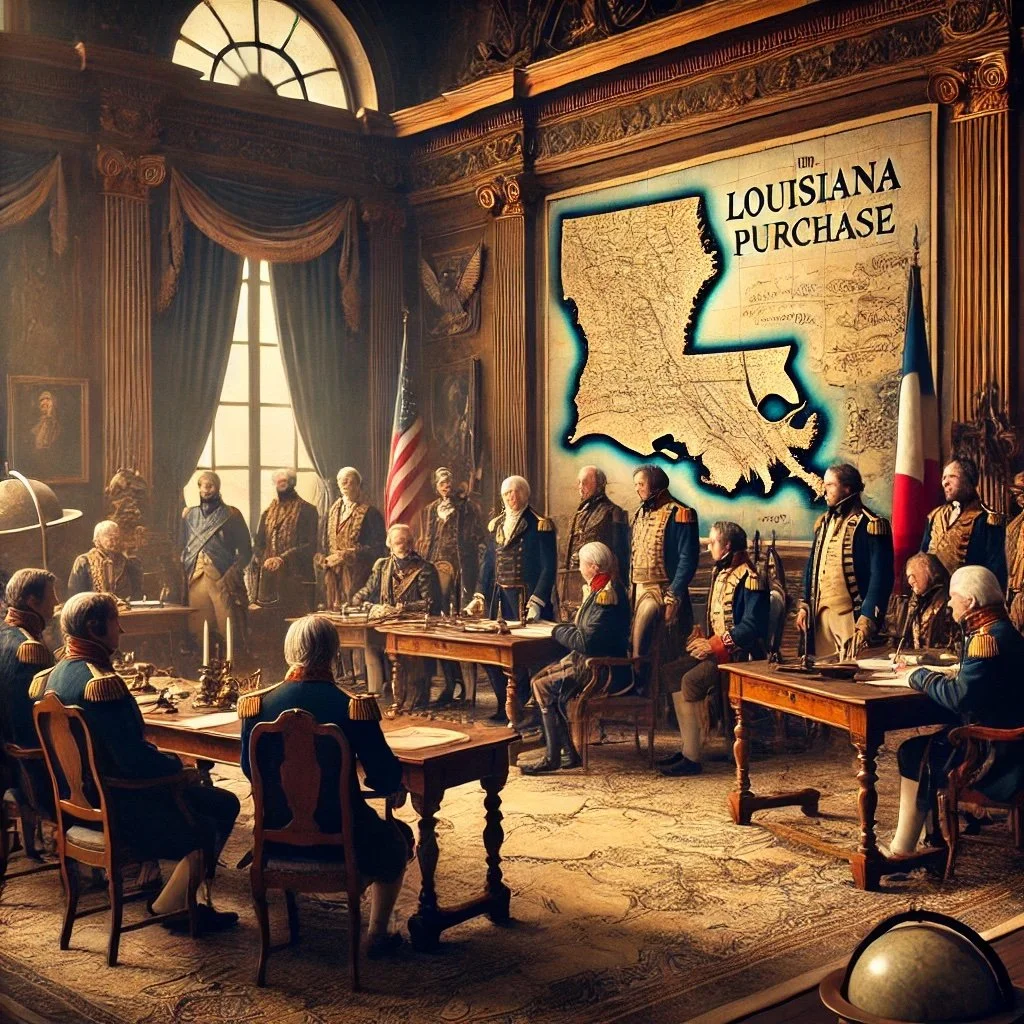
The Louisiana Purchase
The Louisiana Purchase of 1803 was a landmark agreement in which the United States bought the vast Louisiana Territory from France, doubling the nation’s size and securing control of the Mississippi River. It allowed expansion and reshaped the young republic.
-
![Vintage map showing a grid-patterned city layout next to a river, with streets, parks, and some labeled areas in French.]()
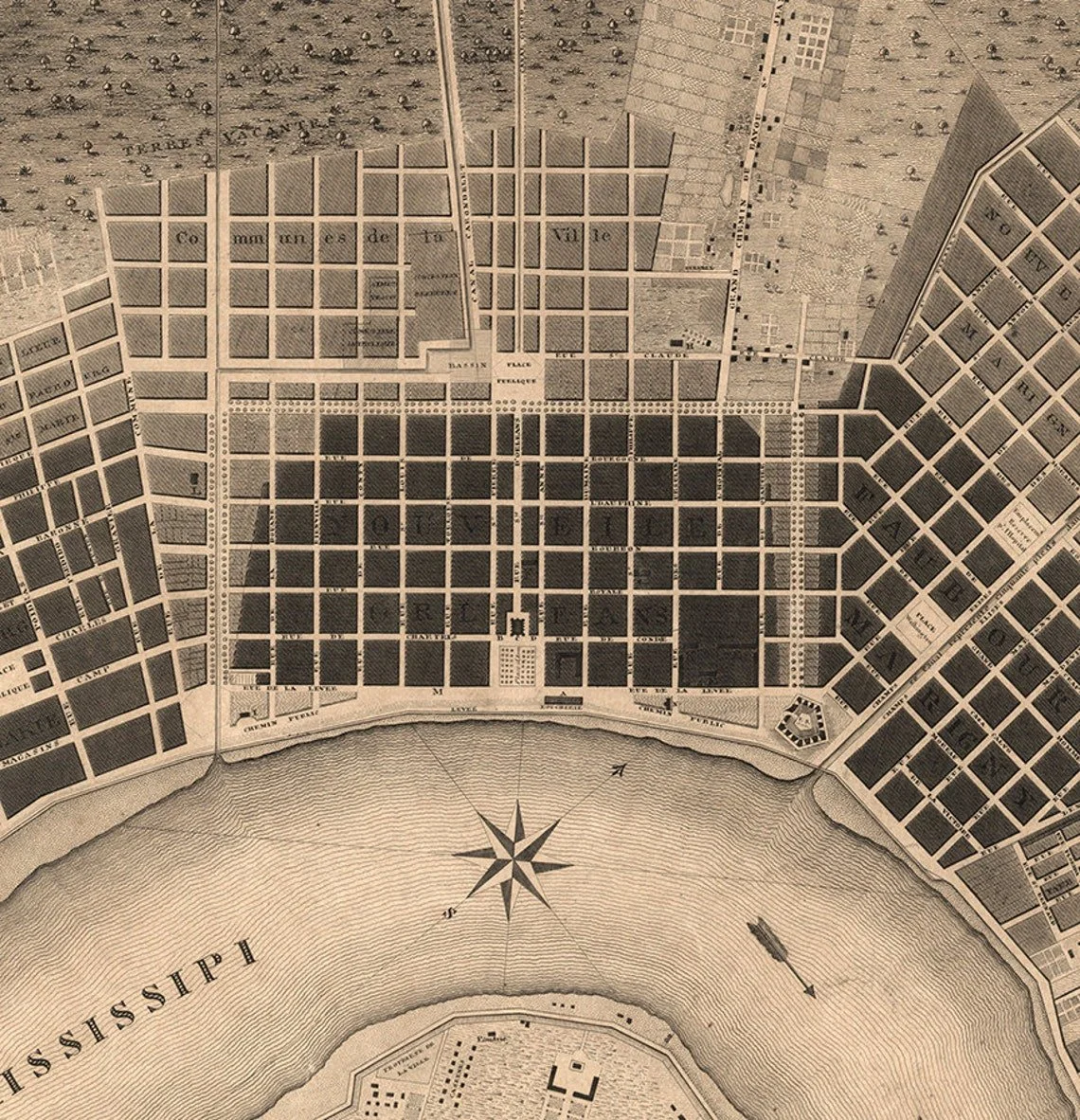
Louisiana become a Territory
The Territory of Orleans, established in 1804, marked the beginning of structured American rule in southern Louisiana. As U.S. officials introduced new laws and institutions, they had to navigate the region’s deeply rooted diverse population.
-
![A watercolor painting of a historical building with a crowd of people gathered in front of it, including a horse on the left side.]()
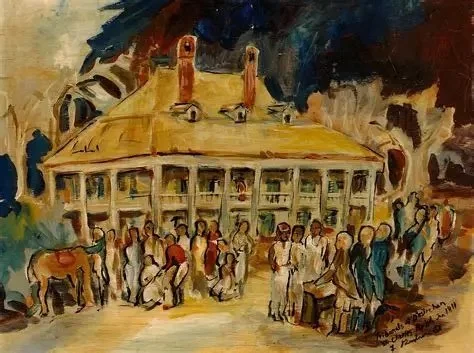
1811 Louisiana Massacre
The 1811 German Coast Uprising was a major slave revolt in Louisiana in which hundreds of enslaved people marched toward New Orleans seeking freedom. Militia and federal forces quickly crushed the movement.
-
![Painting depicting a battle scene from the American Revolutionary War, with soldiers in red coats attacking from a hill, and a commanding officer pointing a sword from the top, with American flags visible.]()
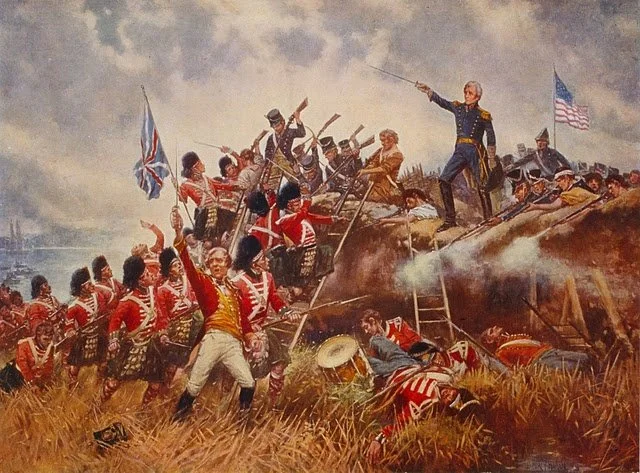
The War of 1812
New Orleans was a key target in the War of 1812 because whoever controlled the Mississippi River controlled western trade. When British forces advanced on the city, Creoles, free people of color, Native allies, and American troops—joined together to defend it.

Slavery in Louisiana
-
![Black and white illustration of a diverse group of African American children and adults outside a wooden building, with two men playing guitars and children dancing or watching.]()
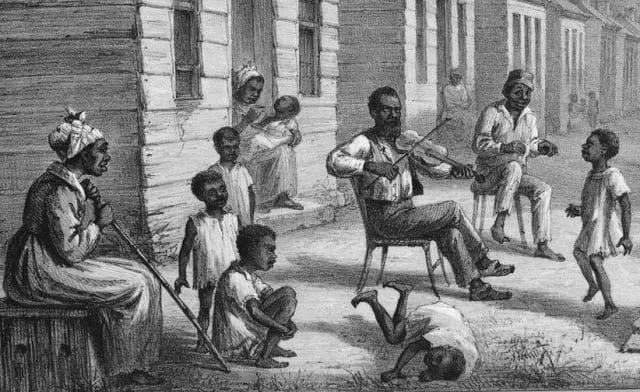
Slavery & Louisiana Music
Louisiana's Musical Roots explores the music and traditions created by enslaved Africans and their descendants, and how African rhythms, songs, dances, and spiritual traditions helped shape Louisiana's distinctive musical culture.
-
![Group of people, including men, women, and children, working in an agricultural field with baskets of produce, possibly cotton, and animals like goats, in a rural setting.]()
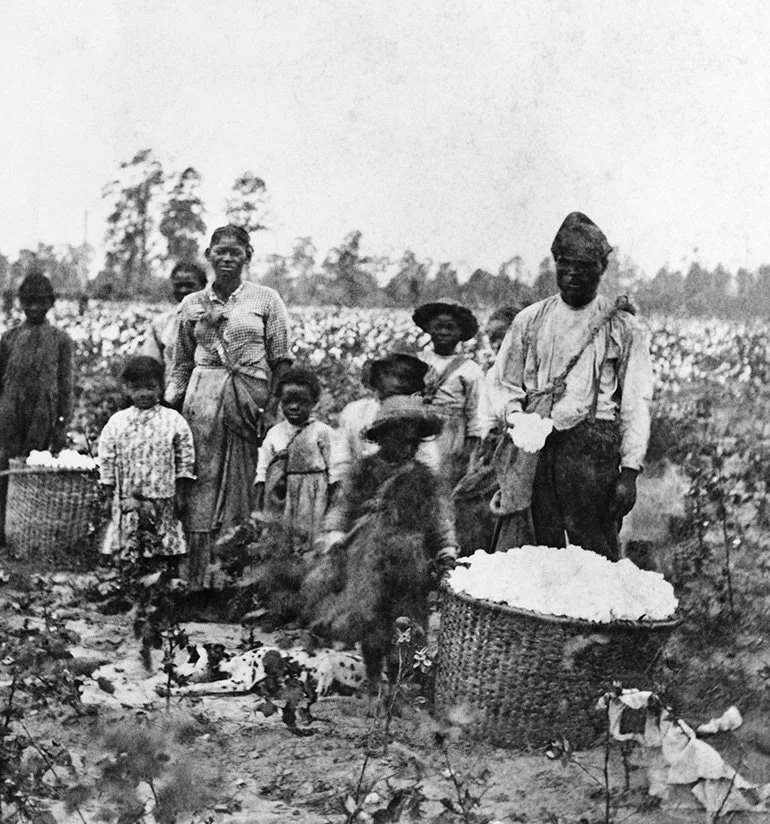
BEFORE THE CHAINS: AN INTRODUCTION
Louisiana’s history cannot be fully understood without confronting the history of slavery. For more than a century, forced migration and human bondage shaped the state’s economy, communities, laws, and culture. Writen by Jason Guillory
-
![Historical black and white photograph of seven African American people and a dog outdoors against a wooden fence, including children, men, and women, some sitting and some standing.]()
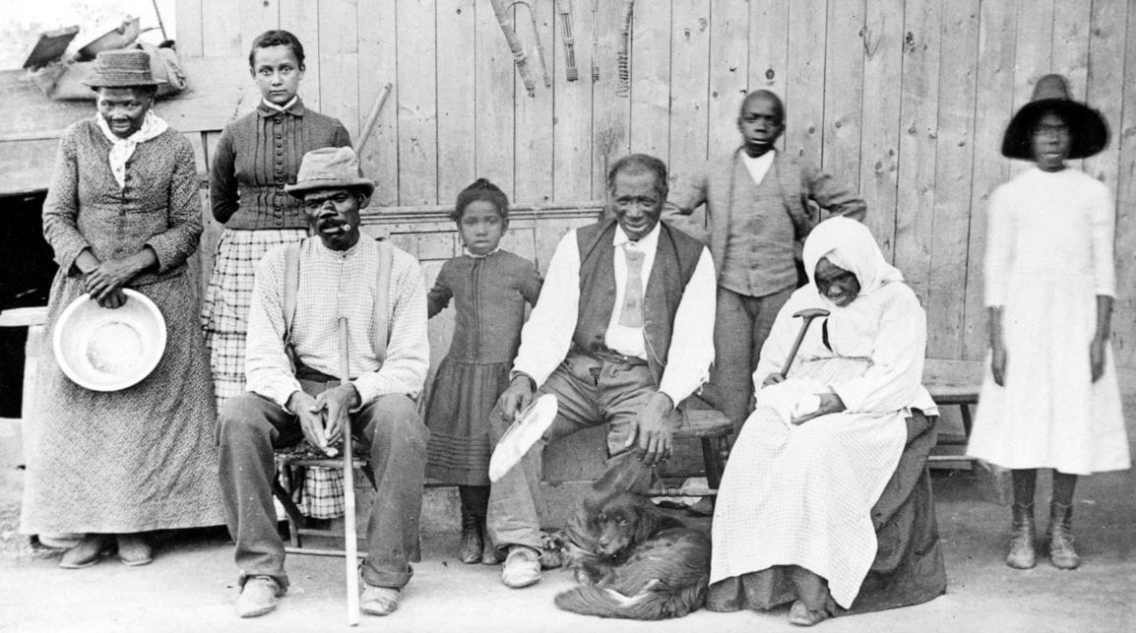
Bound in Chains: Slavery in Louisiana
Bound in Chains: Slavery in Louisiana explores the history and experiences of enslaved people in Louisiana, highlighting the brutal realities of slavery, the forced labor system, and the resistance and resilience of those who endured it.
-
![Black and white photo of two young girls standing near a white picket fence in front of a large historic house surrounded by trees, with a garden and fountain in the background.]()
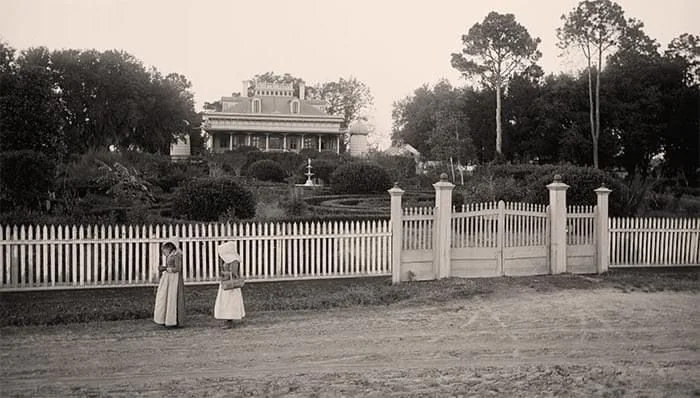
Life on a Louisiana Plantation
Louisiana’s plantation history is deeply connected to the history of slavery and the forced labor of thousands of Africans and African Americans. This two-part series explores what life was like on Louisiana plantations.
-
![Group of seven men dressed in Civil War-era military uniforms, some holding swords or pistols, posed for a photo in front of a painted backdrop.]()
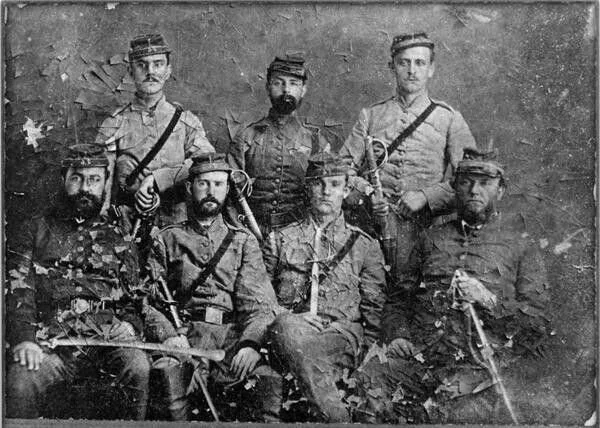
The Civil War
The Civil War forever changed Louisiana, shaping its people, politics, and future. In this eight-part series, Louisiana Passport explores the state's journey from secession and the fall of New Orleans to emancipation, and Reconstruction. Beginning December 10, 2026
-
![A photograph of an old amusement park or fairground ride with a large Ferris wheel and several small house-like structures in the background. The image appears to be black and white, and a group of people dressed in period clothing stand near the ride.]()
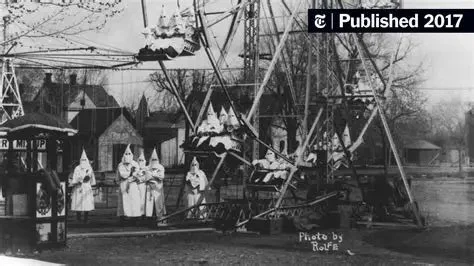
KKK in Louisiana
This two-part series examines the Ku Klux Klan in Louisiana, tracing its emergence in the aftermath of the Civil War. Join us beginning December 18,2026. Content warning: discusses historical racial violence. Some readers may find the subject matter distressing.
-
![A historical black-and-white aerial illustration of a city along a large river with ships and boats on the water, and buildings lining the waterfront.]()
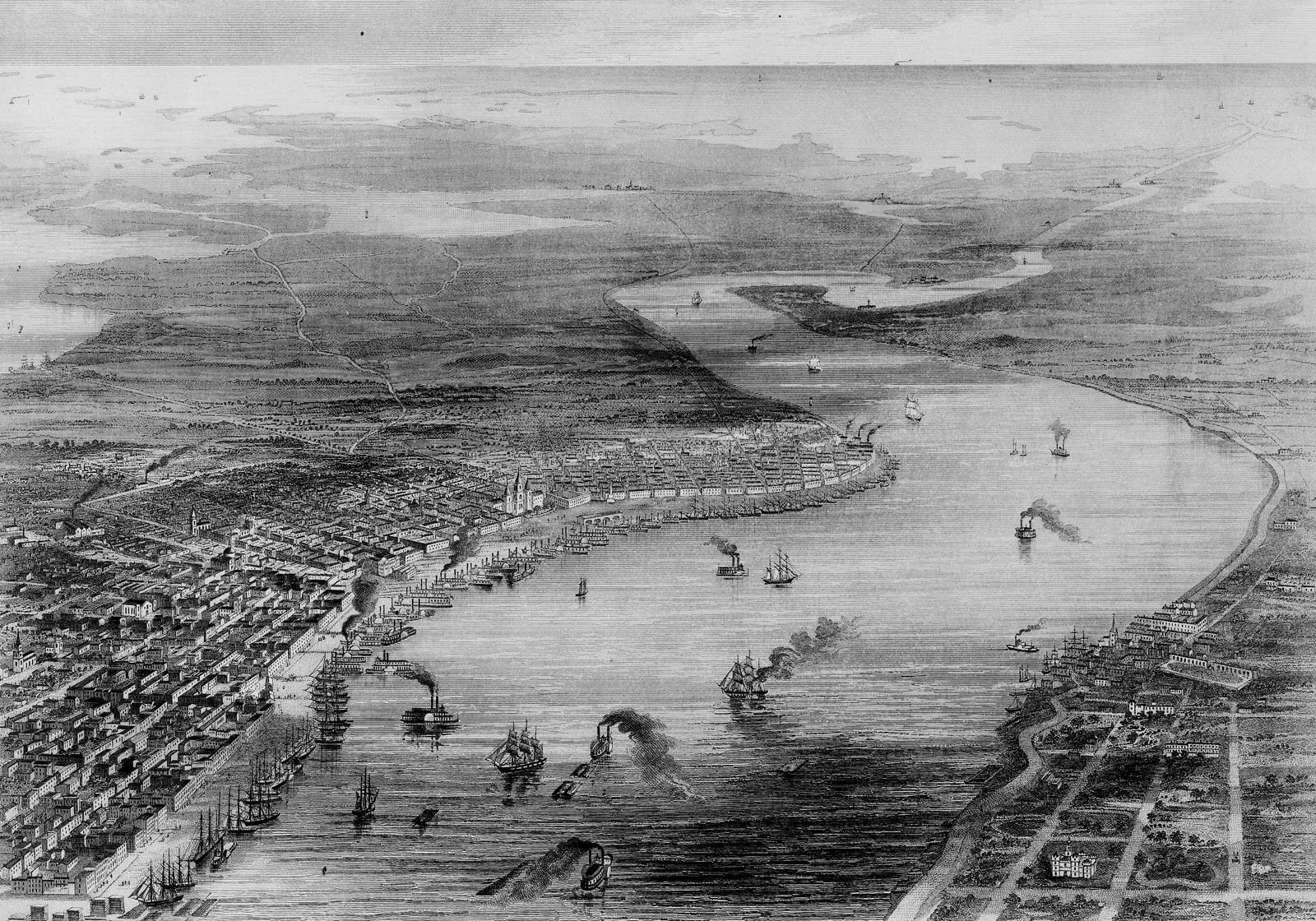
Louisiana: Reconstruction Era
The Civil War left Louisiana economically devastated, politically divided, and facing an uncertain future. The abolition of slavery fundamentally changed the state's social and economic structure. Join us December 28, 2026.
-
![Historical document from the 38th Congress of the United States, dated December 5, 1864, proposing an amendment to the U.S. Constitution. Signed by Abraham Lincoln, with signatures of Henry Clay and T. C. Hamilin.]()
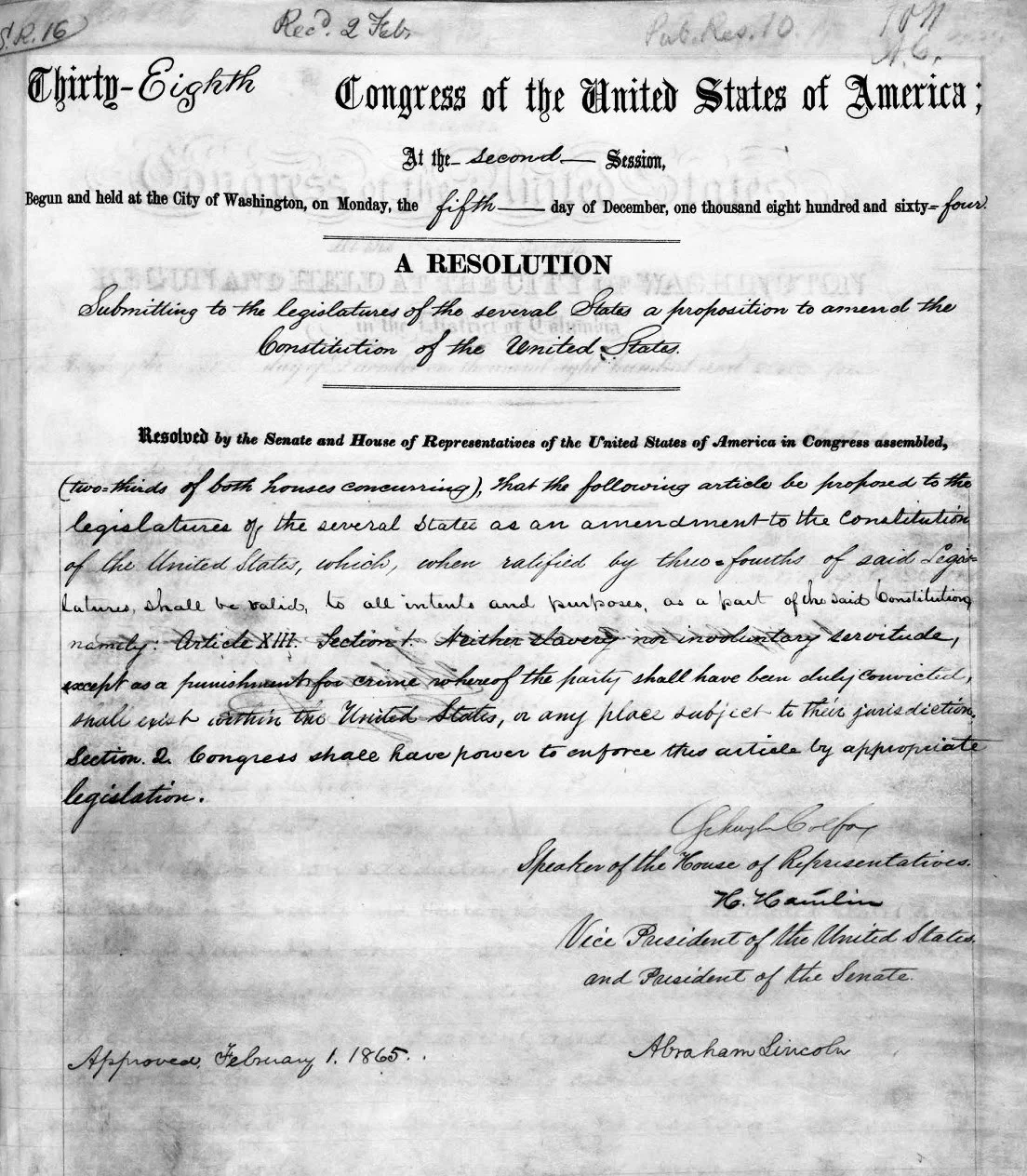
The 13th Amendment
The 13th Amendment, ratified on December 6, 1865, permanently abolished slavery and involuntary servitude in the United States, marking one of the most transformative constitutional changes in American history. Join us January 6, 2027.
-
![Close-up of a handwritten historical document with cursive writing on aged, yellowed paper.]()
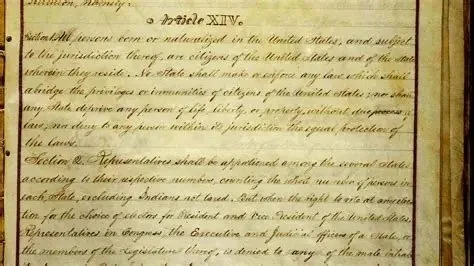
The 14th Amendment
Ratified on July 9, 1868, after the Civil War, the 14th Amendment granted U.S. citizenship and guaranteed equal protection under the law. It became a major part of Reconstruction and reshaped civil rights in the United States. Join us January 6, 2027.
-
![Historical Emancipation Proclamation document with decorative calligraphy, a portrait of Abraham Lincoln, and an illustration of a soldier in uniform.]()
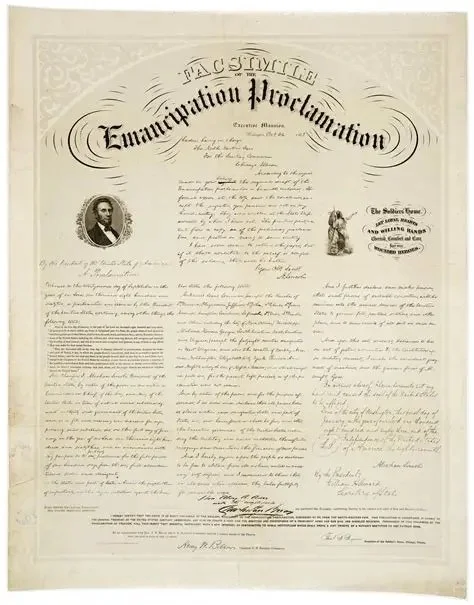
The Emancipation Proclamation
The Emancipation Proclamation took effect on January 1, 1863, declaring enslaved people in Confederate‑controlled territories legally free and redefining the Civil War as a fight against slavery. Join us January 15, 2027.
Louisiana after reconstruction
-
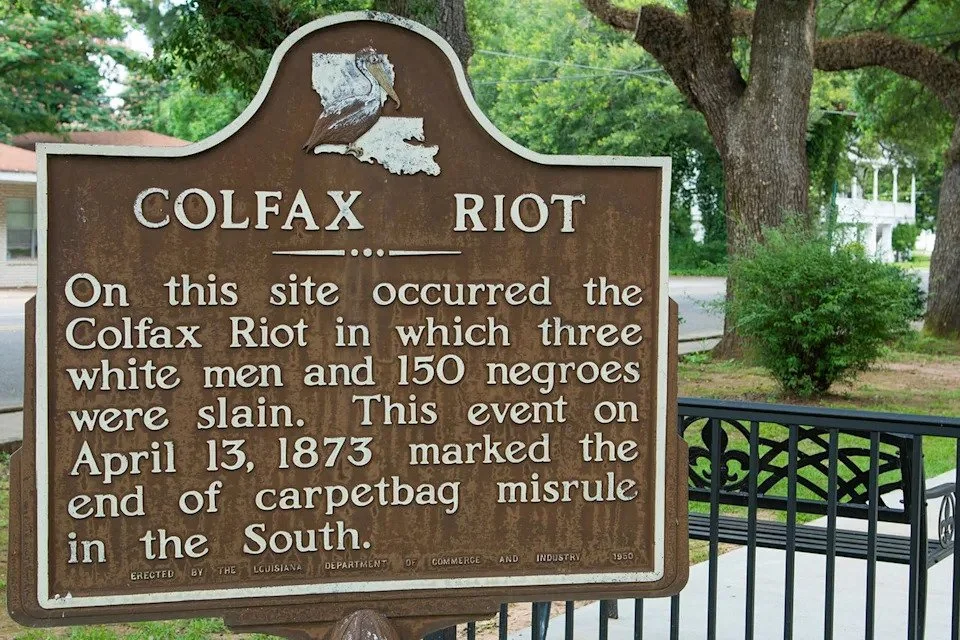
![Historical marker about the Colfax Riot stating that it occurred on April 13, 1873, where three white men and 150 African Americans were killed. The event marked the end of a carpetbag misrule in the South.]()
Colfax Massacre (1873)
The Colfax Massacre occurred on April 13, 1873, in Colfax, Louisiana, when an armed white militia attacked Black Republican freedmen who had occupied the Grant Parish courthouse amid a disputed election, most were killed regardless. Join us January 22, 2027.
-
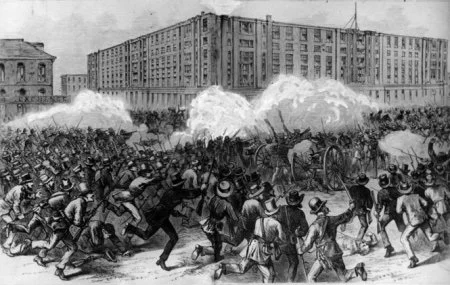
![A historical black-and-white illustration of a large protest or riot with people running and throwing objects, with buildings in the background.]()
Battle of Liberty Place (1874)
Occurring before Reconstruction ended, the 1874 Battle of Liberty Place saw the White League attempt to overthrow Louisiana’s Republican government, symbolizing the return of white political control. Join us February 6, 2027.
-
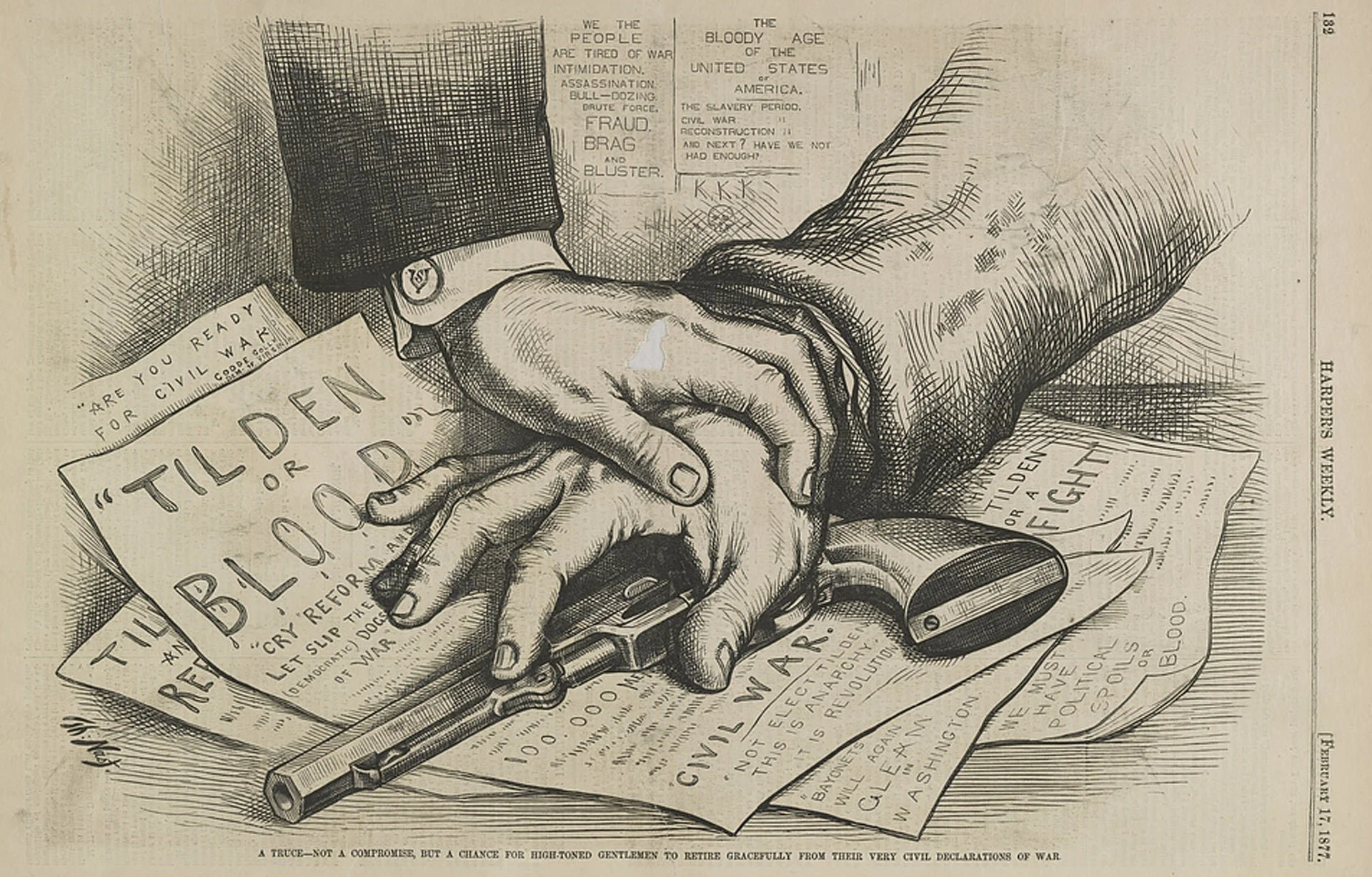
![An illustrated drawing of two hands shaking, with documents and a lighter on the table. The documents include a Civil War-era declaration and a pamphlet titled 'Till Demon or Bloody'.]()
Compromise of 1877
Settled the disputed presidential election by making Rutherford B. Hayes president and ending federal Reconstruction in the South. The withdrawal of federal troops paved the way for segregation and disenfranchisement. Join us February 26, 2027.
-
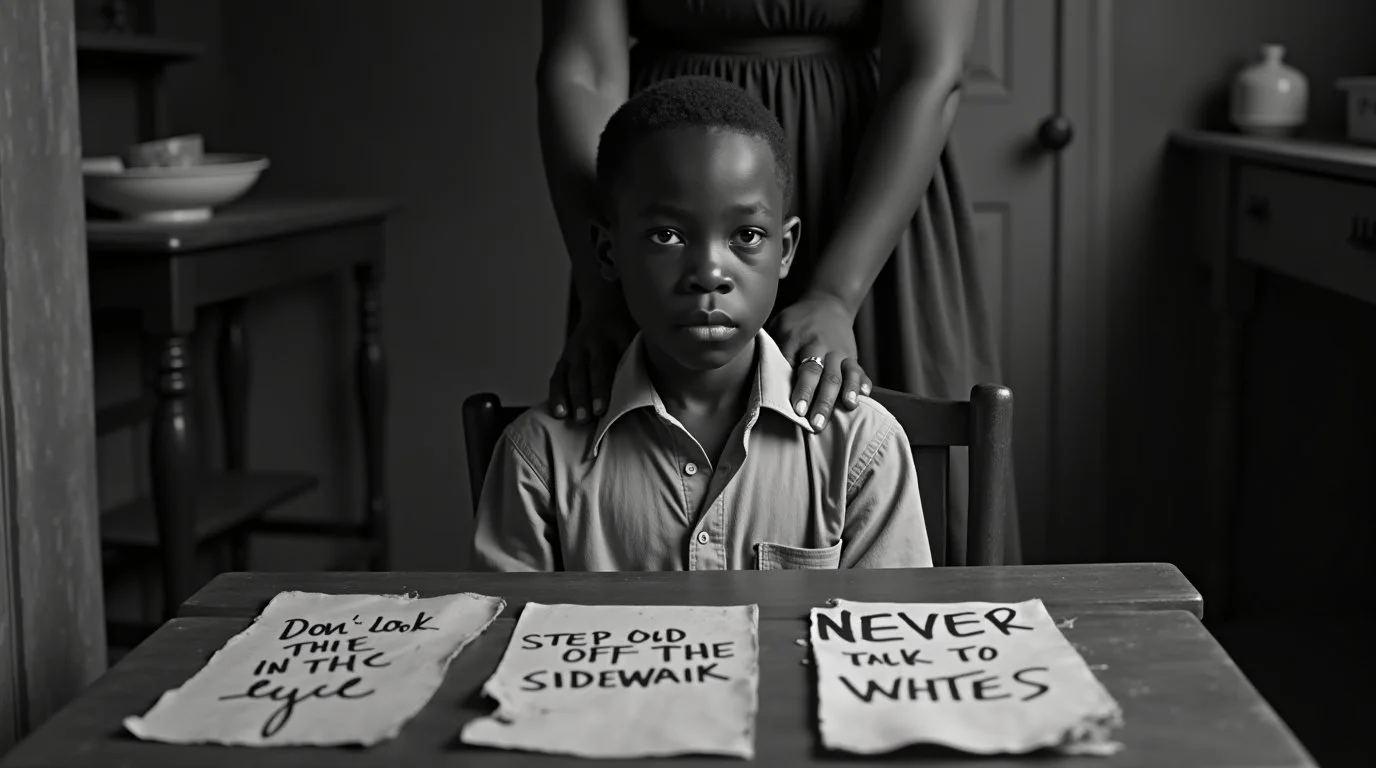
![A young Black boy sitting at a table with three handmade signs that read, from left to right: 'Don't look them in the eye,' 'Step out of the sidewalk,' and 'Never talk to whites.' An adult woman stands behind him with her hands on his shoulders. The scene is in black and white.]()
Louisiana: Black Codes & Jim Crow
This two-part series explores black Laws of Reconstruction to the rise of Jim Crow. Discover how segregation, disfranchisement, racial violence, and resistance shaped Louisiana. Join us beginning January 18, 2027.
-
![A black-and-white photo of a steamboat with three smokestacks on a body of water, emitting dark smoke, with a flat landscape in the background.]()
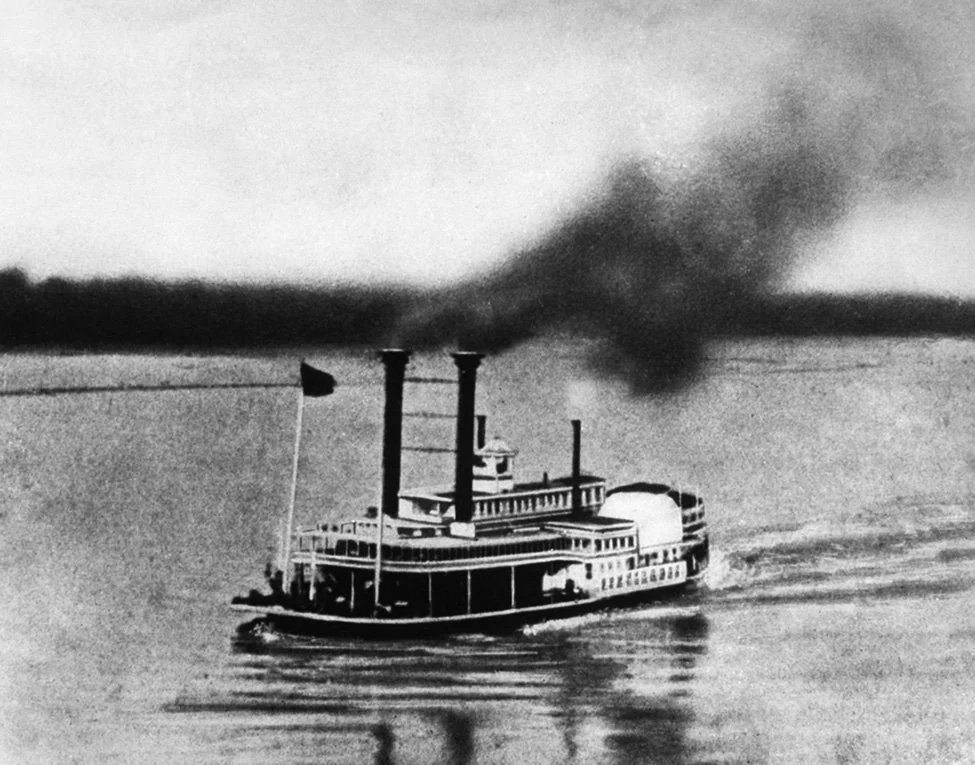
Hall v. DeCuir (1878)
Involved racial segregation on a Louisiana steamboat. The Court ruled that states could not enforce segregation laws that interfered with interstate commerce, making the case significant in the history of civil rights and segregation. Join us March 12, 2027.
-
![Black and white portrait of Abraham Lincoln with a beard, wearing a suit and bow tie.]()
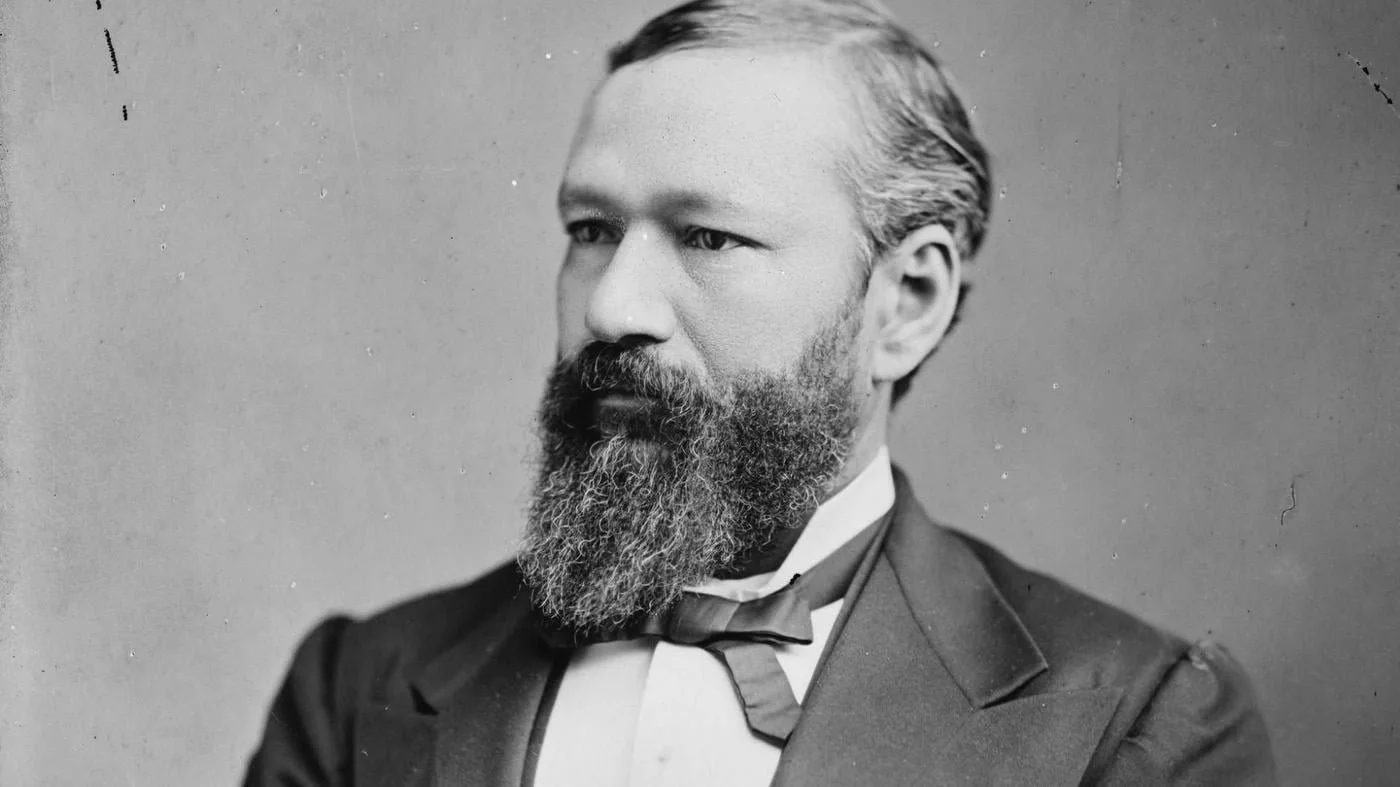
Plessy v. Ferguson (1896)
The most consequential case to come out of Louisiana. Homer Plessy, a Black man from New Orleans, deliberately boarded a "whites-only" train car to challenge Louisiana's 1890 Separate Car Act. The case went to the U.S. Supreme Court. Join us March 26, 2027.
-
![Historical black and white engraving of a large crowd gathered in front of a grand, multi-story building with ornate architecture during a parade or protest, with banners and flags visible.]()
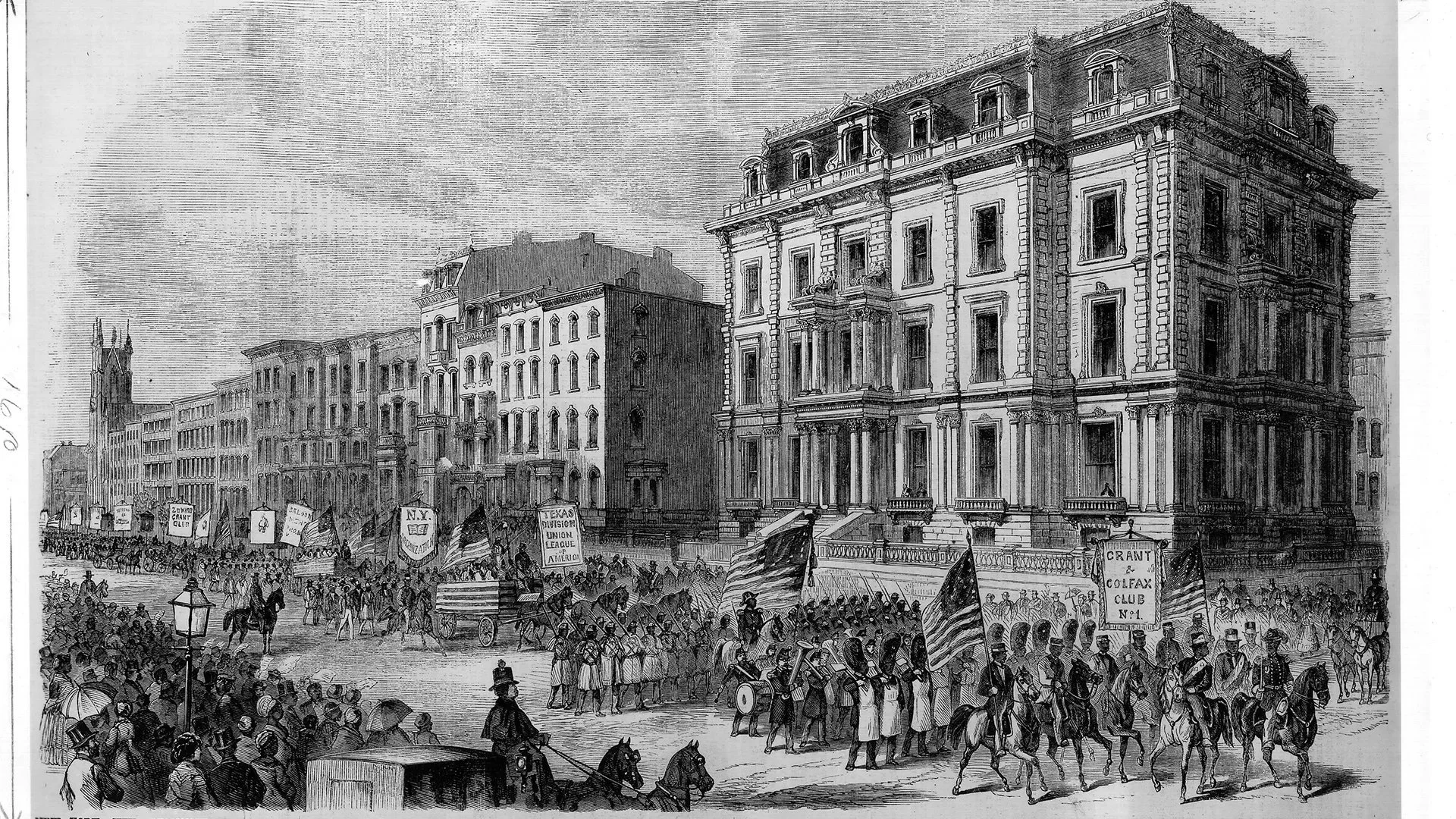
End of Reconstruction (1877)
Following the disputed 1876 presidential election, resolved by the Compromise of 1877: Republican Rutherford B. Hayes secured the presidency in exchange for withdrawing remaining federal troops from the South. Join us April 9, 2027.
-
![Historical handwritten document titled 'Constitution of the Form of Government of the State of Louisiana'.]()
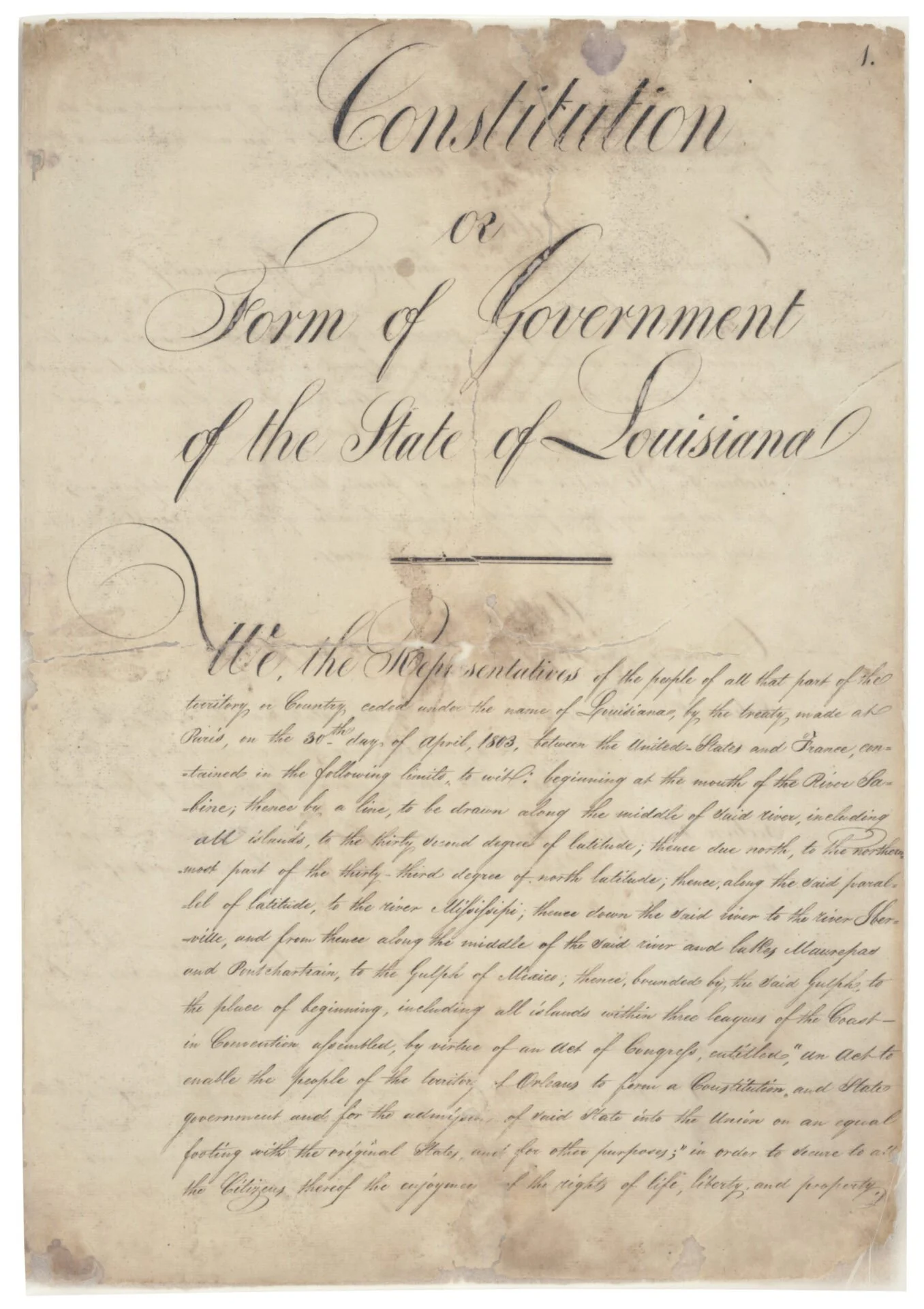
Louisiana Constitution of 1898
Explicitly designed to disenfranchise Black voters; registered Black voters dropped from about 130,000 to roughly 5,000 within a few years. Continued lynchings and direct segregation. Join us April 19, 2027.
-
![Historical black and white photograph of a busy downtown street filled with vintage streetcars, cars, and pedestrians, featuring multi-story commercial buildings with signs and awnings from the early 20th century.]()
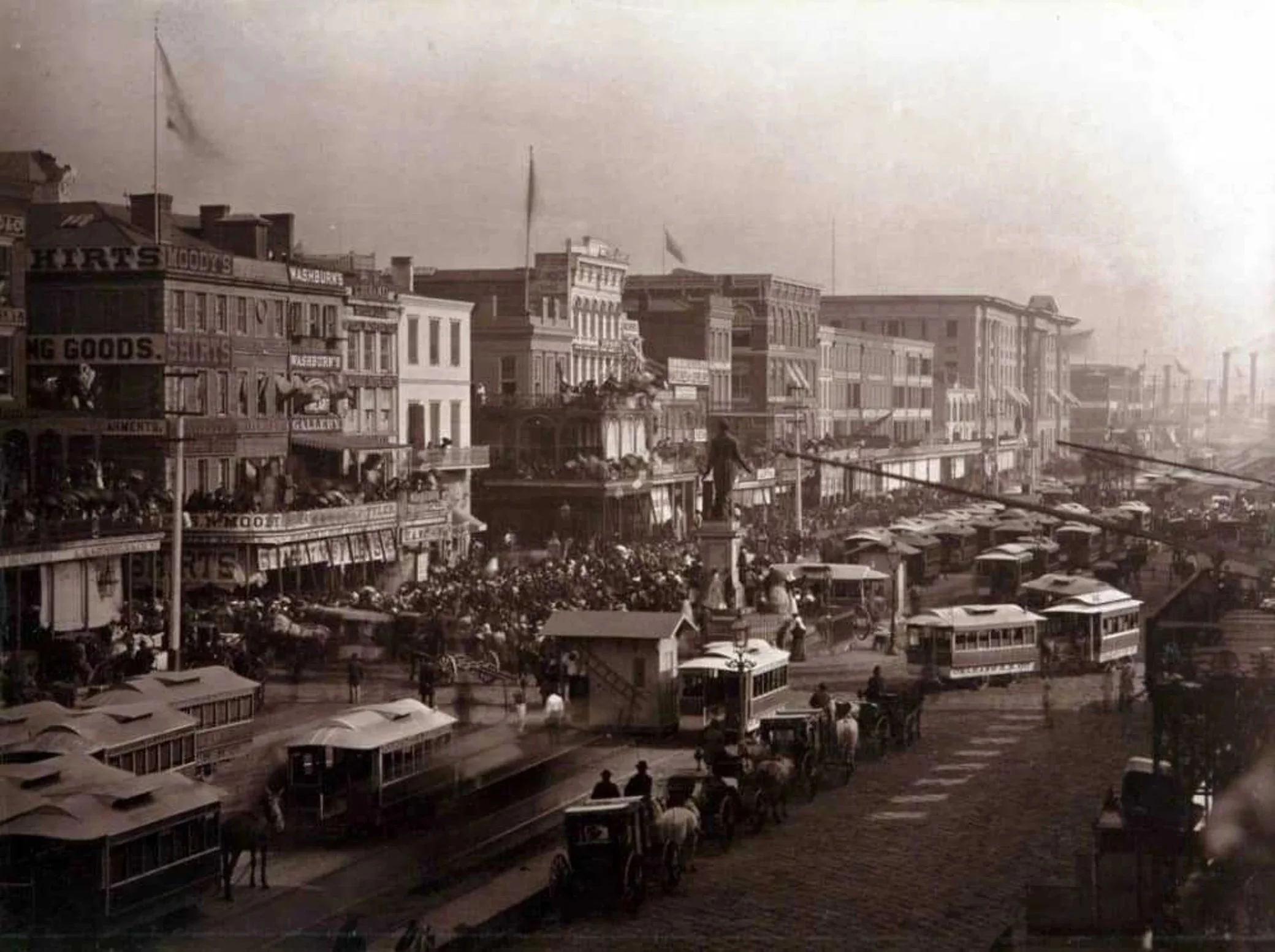
Industry after Reconstruction
Louisiana's industrial transformation from 1865 to 1901 — from the collapse of the plantation labor system and rise of sharecropping, through the rebuilding of sugar and rice agriculture. Join us April 28, 2027.
Louisiana Weather
-
![A man walking through a street with destroyed buildings and wreckage from a natural disaster or explosion, with damaged cars and telephone poles.]()
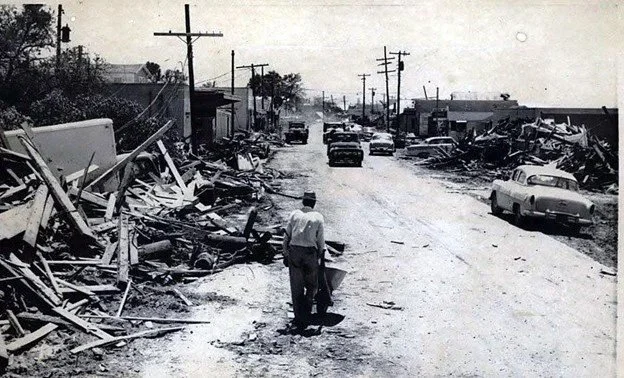
Hurricanes & Tropical Storms
Explore Louisiana’s history of powerful hurricanes, from Hurricane Audrey in 1957 to Hurricane Francine in 2024. Learn how major storms such as Betsy, Katrina, Rita, Ida, and others have impacted communities, and shaped the state’s landscape.
-
![Flooded street with several people including some on a wagon pulled by a horse and others wading through water, in front of houses.]()
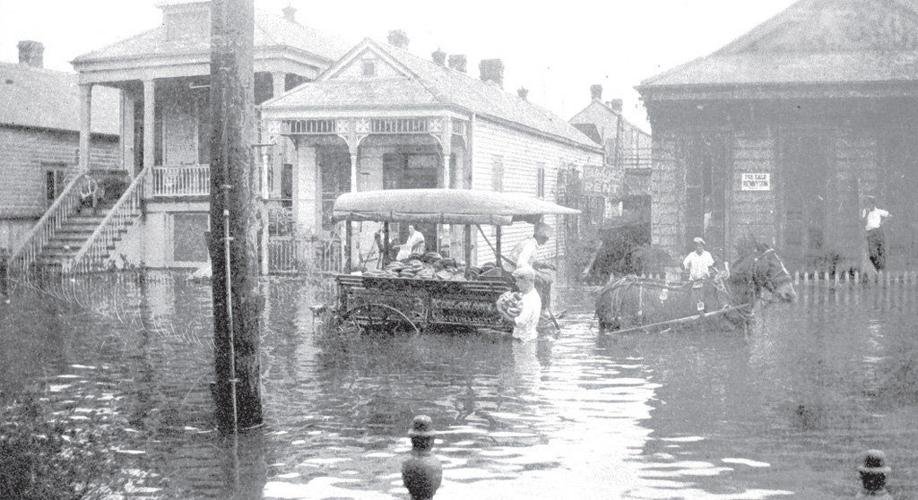
Flooding and Louisiana region
Major floods have had a significant impact on the Mississippi River region and Louisiana throughout history. Events such as the floods of 1927, 1937, 1973, 1993, 2016, and 2019 caused widespread damage, displacement, and economic losses.
-
![A residential neighborhood after a storm with debris scattered on the street, broken utility pole leaning, damaged house with solar panels, and overcast sky.]()
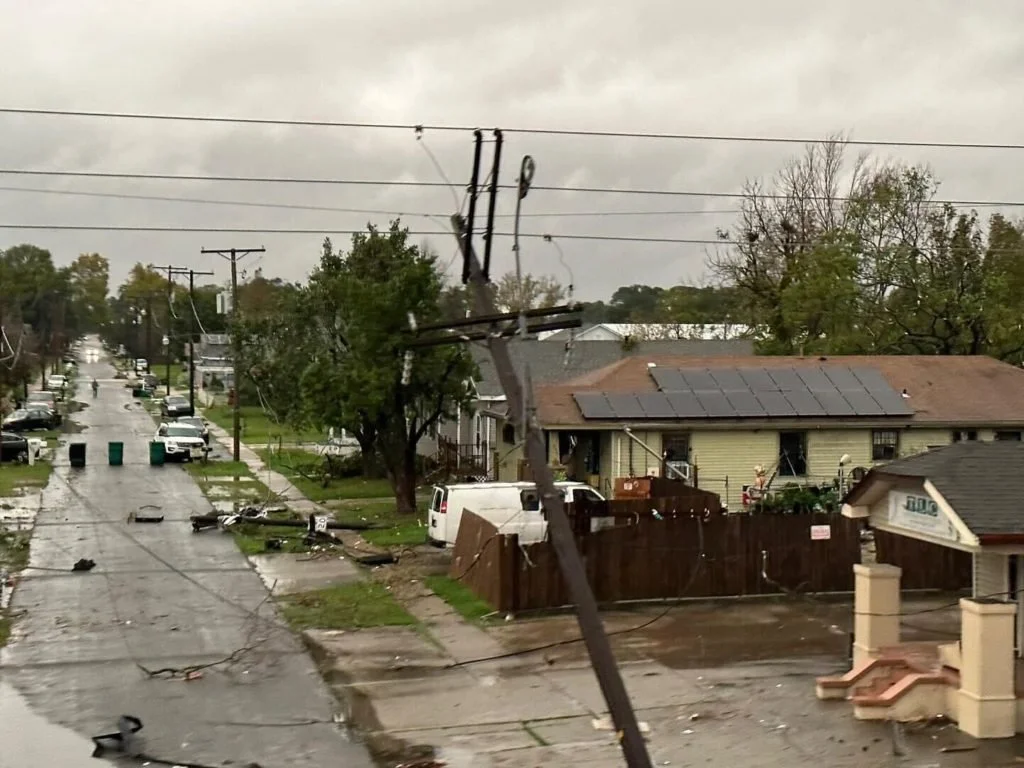
Tornado Events in Louisiana
From the 1971 outbreak to the tornadoes of 2024, Louisiana’s skies have unleashed powerful storms that leave lasting marks on communities. These events show how dangerous the state’s weather can be.
-
![Lightning strike over city skyline and river at night]()
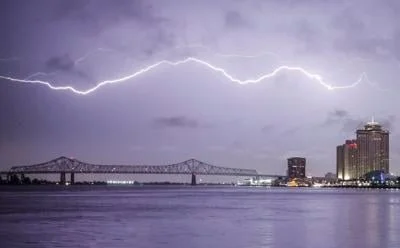
Severe Weather
A concise exploration of severe Gulf South storm hazards, this piece outlines how thunderstorms, straight‑line winds, hail, lightning, microbursts, and downbursts disrupt communities through power outages, property damage, and flooding.
-
![A vintage tram with bright headlights moving through a city street during a heavy rainstorm, with pedestrians holding umbrellas crossing in front of the tram.]()
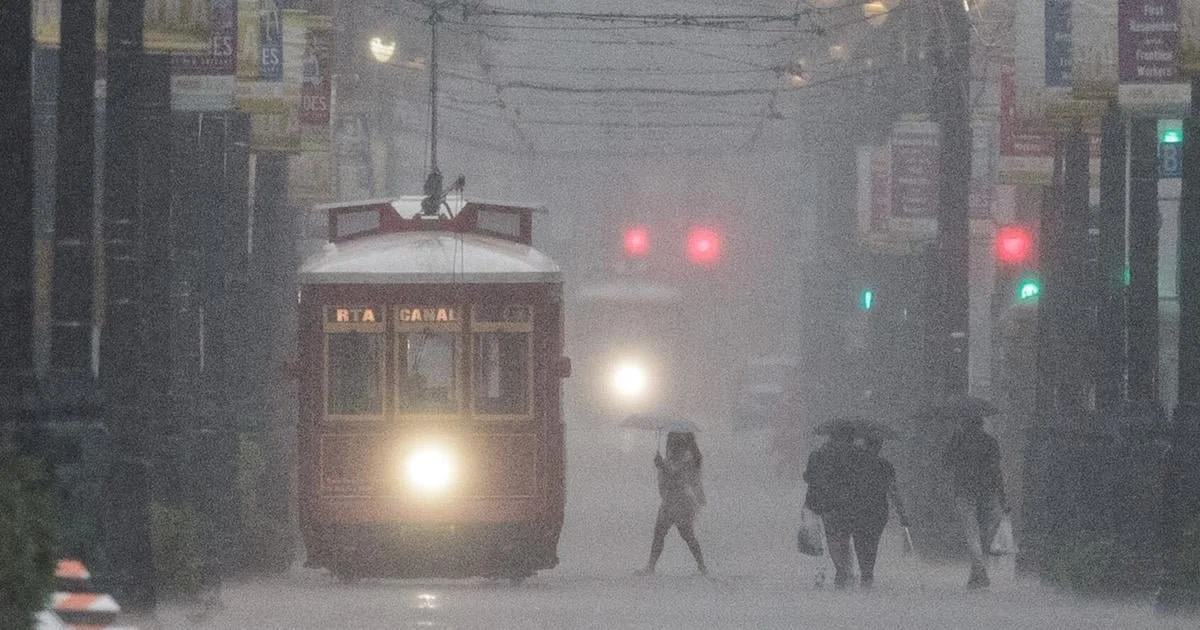
Impact of Extreme Rainfall
Louisiana frequently experiences extreme rainfall that can overwhelm drainage systems and cause serious urban and river flooding. Low-lying areas, heavy development, tropical storms, and intense weather patterns increase the risk of flooding.
-
![Aerial view of a residential neighborhood flooded with water, submerging houses, trees, and streets.]()
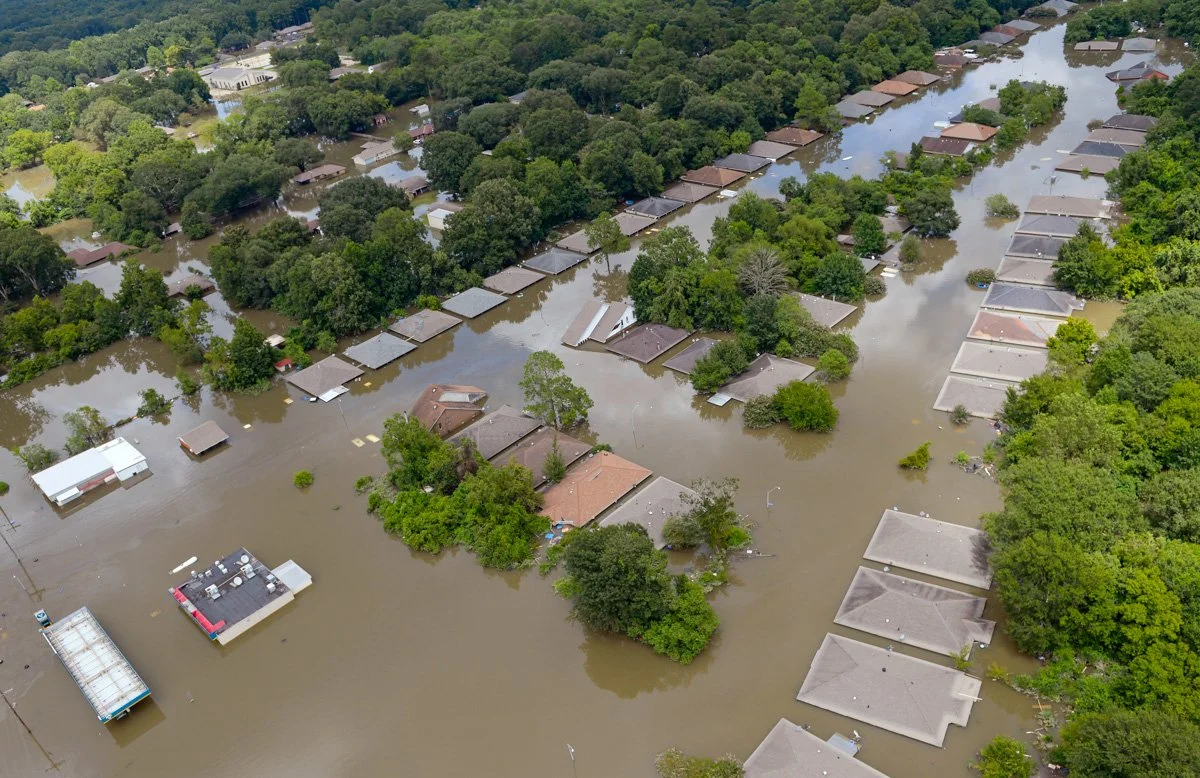
STORM SURGE & COASTAL FLOODING
Storm surge and coastal flooding are major threats to communities along the Gulf Coast, especially Louisiana. Powerful hurricanes can push large amounts of seawater onto land, causing severe flooding, property damage, displacement, and loss of life.
-
![]()
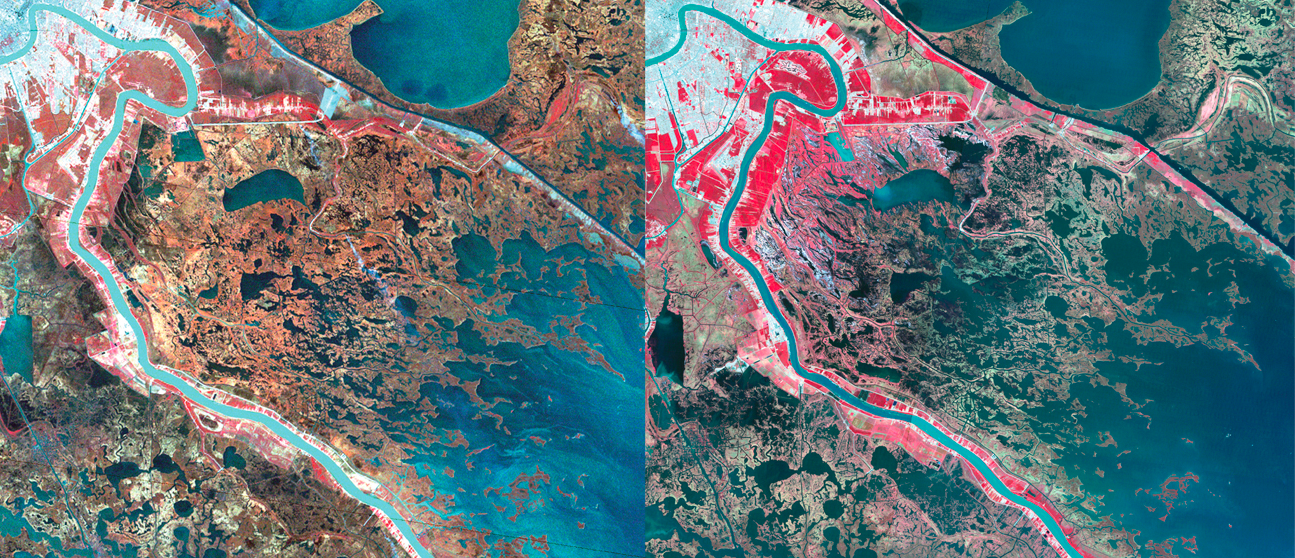
LOUISIANA’S COASTAL CRISIS
Louisiana’s coastline is disappearing due to erosion, land subsidence, rising sea levels, saltwater intrusion, wetland loss, and human activity. The causes and consequences of coastal land loss and its growing impact on Louisiana’s communities, environment, economy, and cultural heritage.
-
![]()
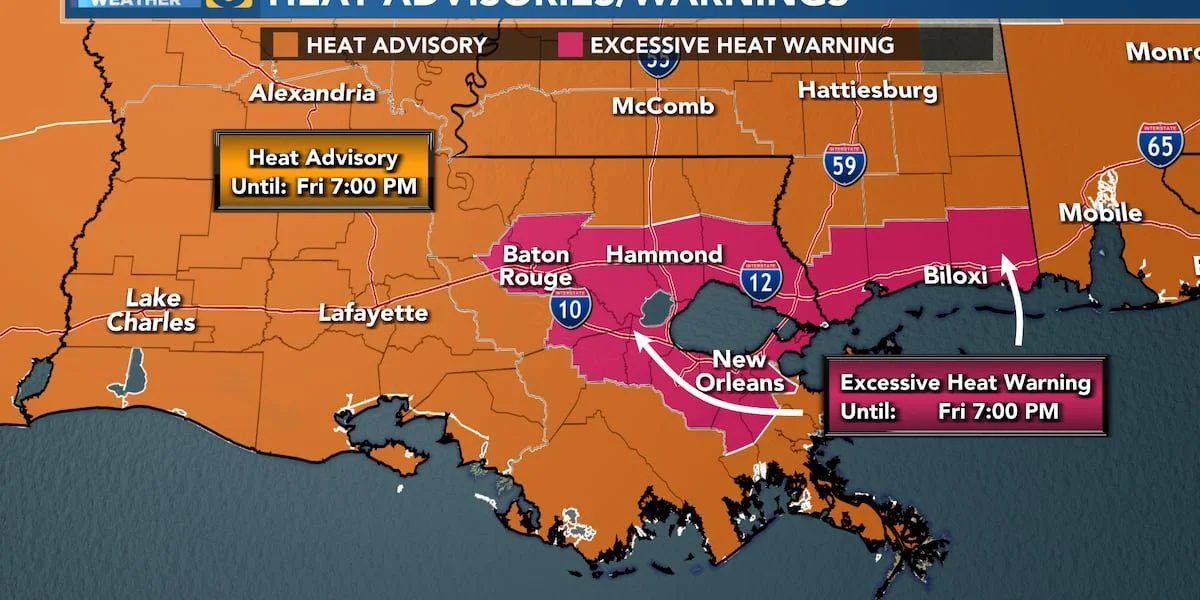
Extreem Heat
Louisiana faces growing danger from extreme heat, especially when high humidity drives heat indexes to hazardous levels. Heat waves strain public health, increase the risk of heat‑related illness, and become even more threatening when power failures leave residents without air conditioning.
-
![]()
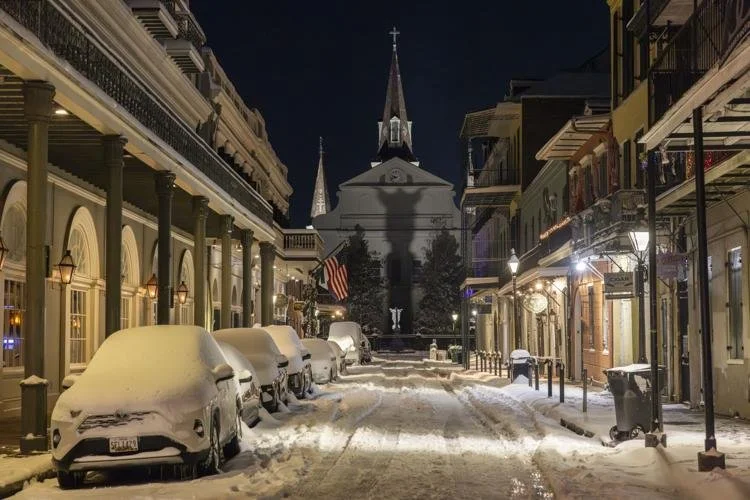
Freezes and Winter Storms
Louisiana may be known for its heat, but winter can occasionally bring dangerous cold, ice, and snow. Explore some of the state’s most memorable freezes and winter storms—from the Great Arctic Outbreak of 1899 to the severe winter weather of 2021 and 2024—and discover how extreme cold has tested Louisiana’s communities.
-
![]()
From Slavery to Prison
Louisiana rebuilt forced labor after emancipation through Black Codes, convict leasing, and early prison camps that targeted newly freed Black people. How Louisiana transformed slavery’s punishment system into the foundation of its modern prisons.
-
![]()
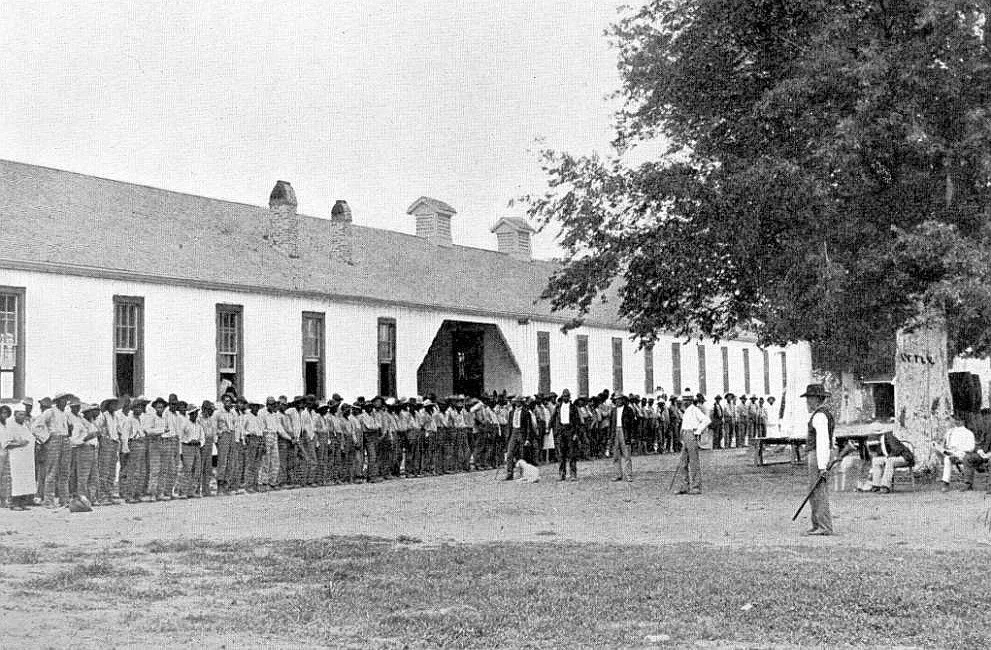
Angola: From Plantation to Prison
Louisiana State Penitentiary—widely known as Angola—stands as one of the most revealing examples of how the economic and racial structures of slavery were rebuilt within the modern prison system.
-
![]()
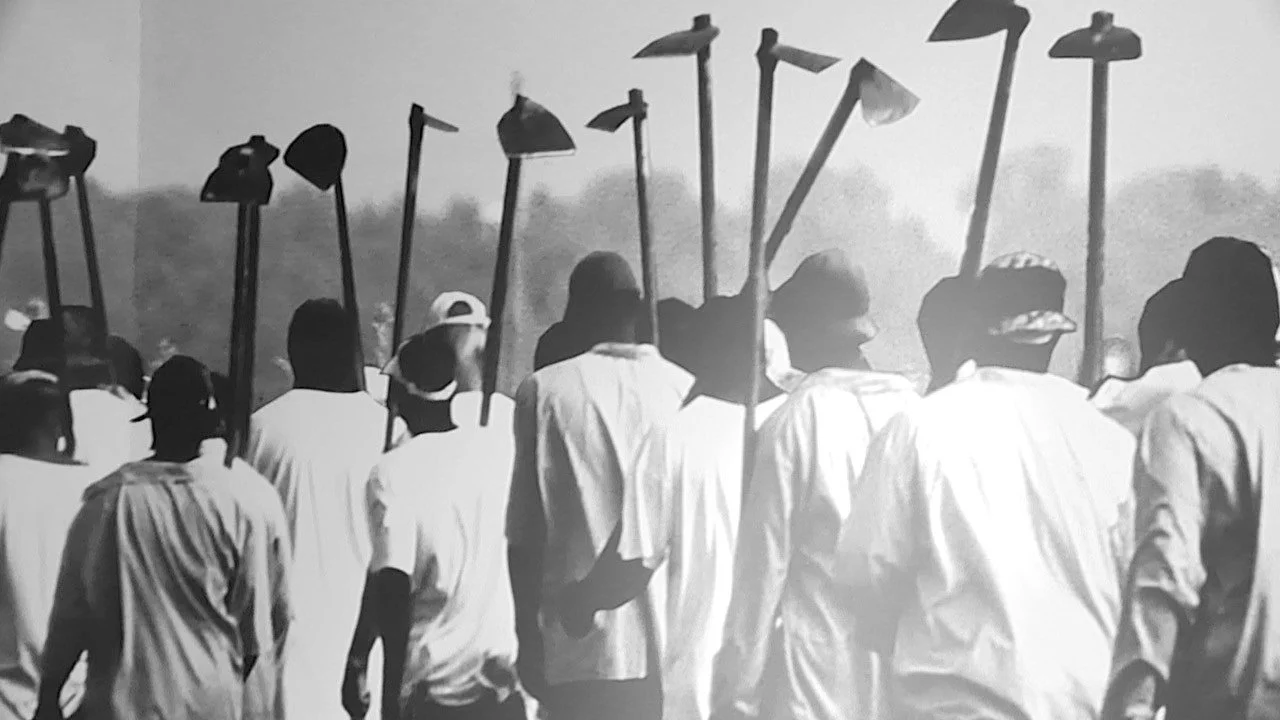
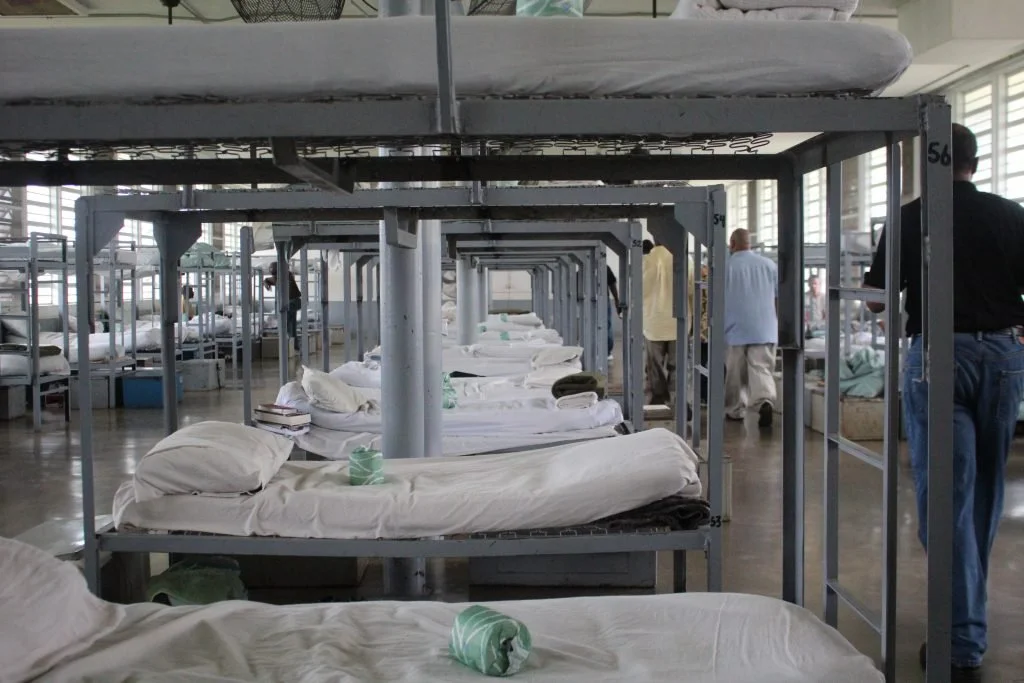
The Prison Boom
Explore how Louisiana became one of America’s most incarcerated states and how decades of sentencing laws, the War on Drugs, and expanding prisons and jails helped fuel the rise of mass incarceration.
The Louisiana Journal
-
![]()
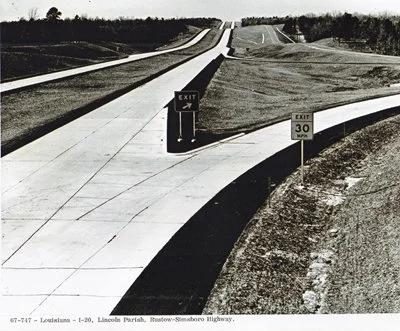
Highway and Bi-Ways
Tracing how routes such as the River Road, Great River Road, Jefferson Highway, Old Spanish Trail, U.S. 61, and Airline Highway reflect the state’s evolution from colonial settlement to modern infrastructure.
-
![]()
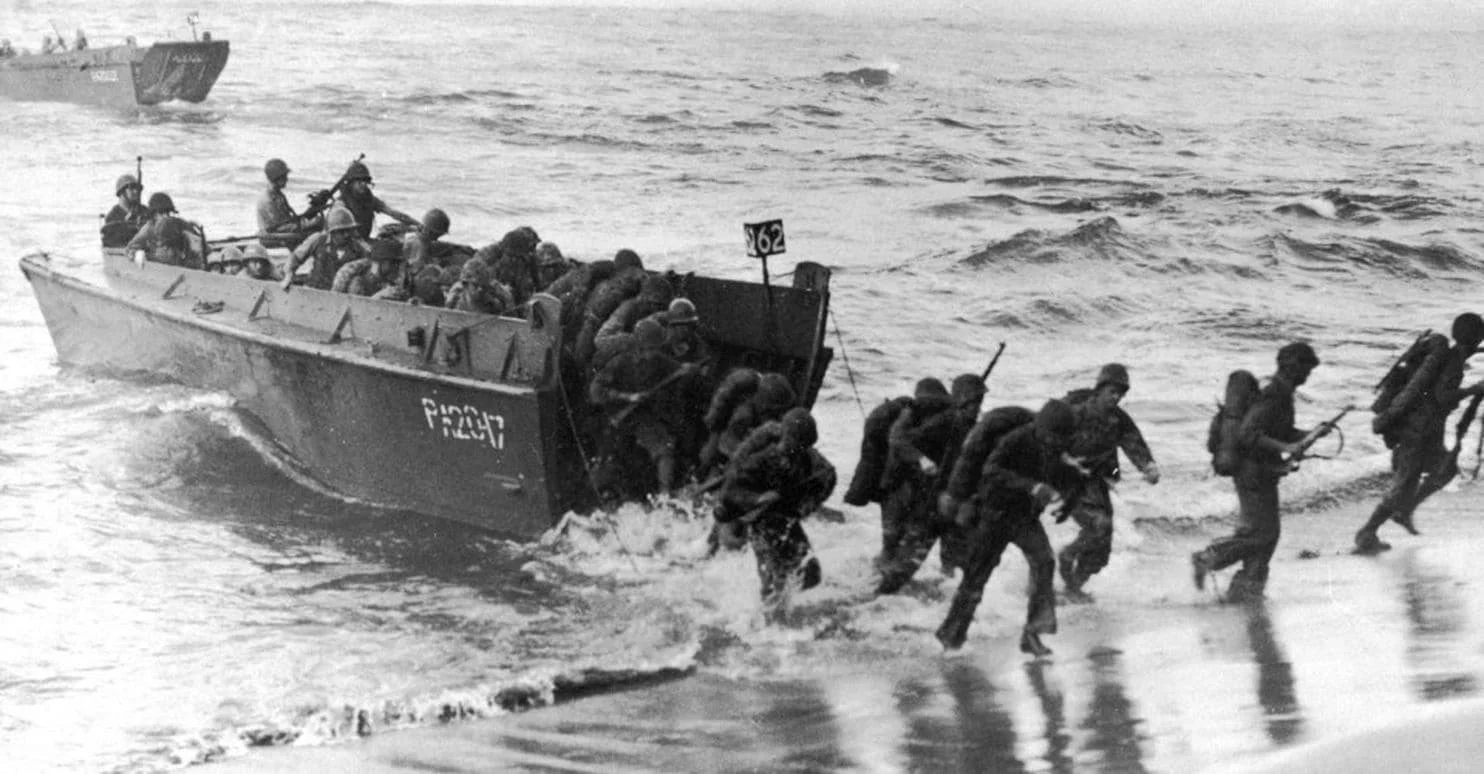
THE HIGGINS BOAT
Discover how Andrew Higgins and the workers of New Orleans helped transform a shallow-water boat design into one of World War II’s most important landing craft, carrying Allied troops during WWII.
-
![]()
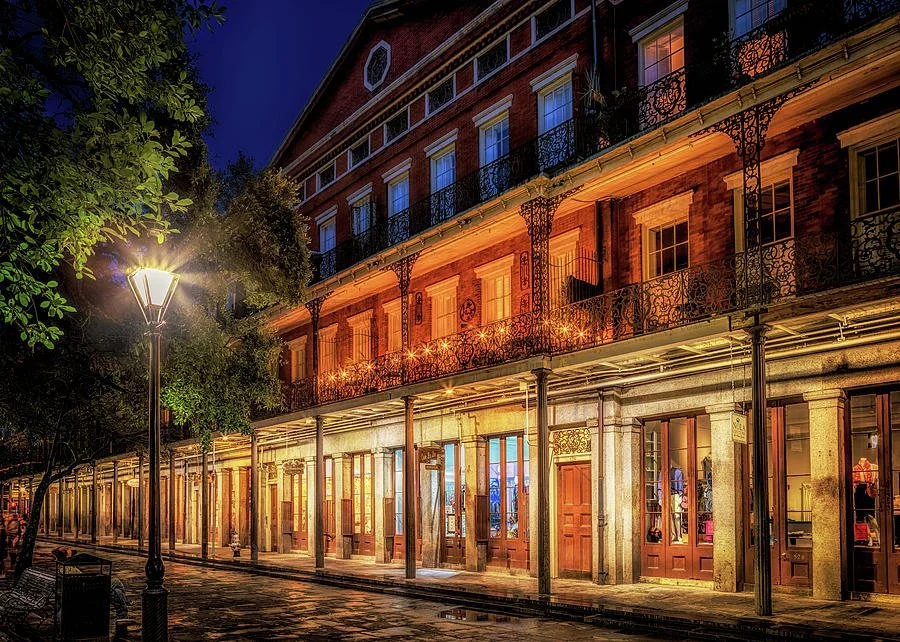
The Pontalba Buildings
Discover the story of New Orleans’ iconic Pontalba Buildings, the grand nineteenth-century structures that helped transform Jackson Square.
-
![]()
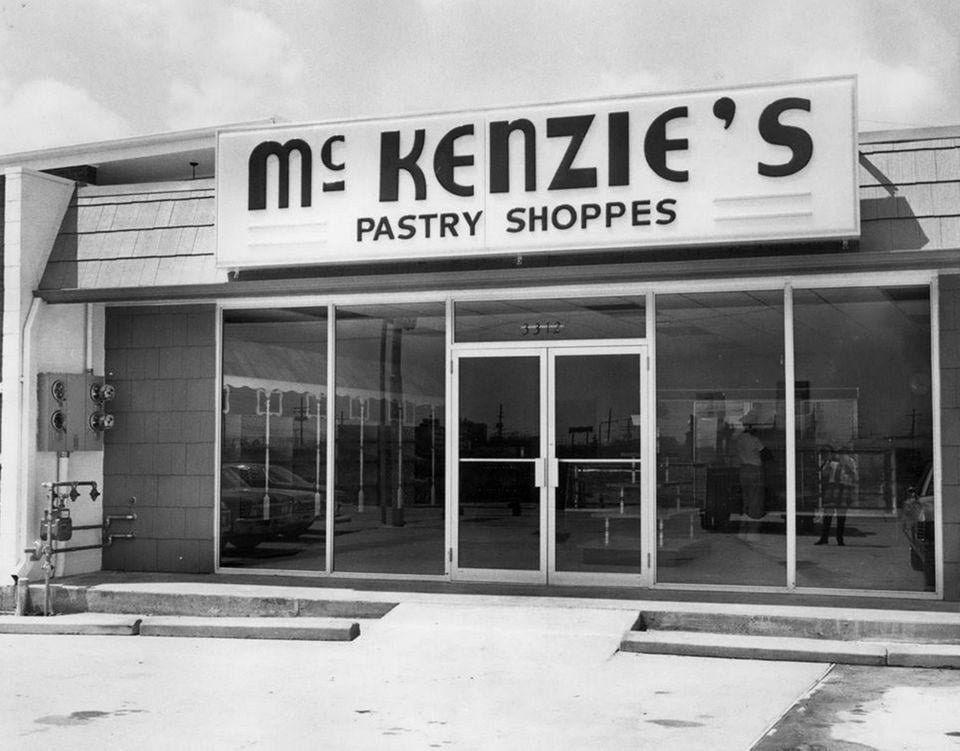
McKenzie's Bakery
This piece traces the rise and fall of McKenzie's Bakery, the beloved New Orleans pastry chain founded by Henry McKenzie and later built into a local institution by Donald Entringer Sr.
-
![]()
CAJUN AND CREOLE
Explore the rich histories of Louisiana’s Cajun and Creole cultures and discover what makes each unique. From their different origins and languages to food, music, traditions, and identity.
-
![]()
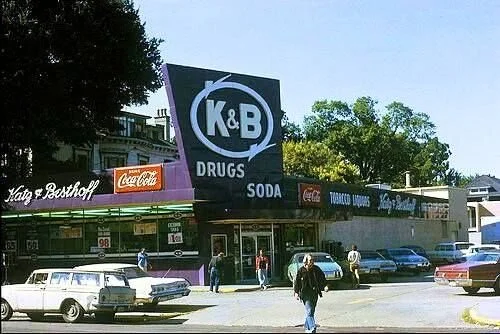
The Purple Drugstore
Discover the story of K&B, the iconic New Orleans drugstore that grew from a single pharmacy into a beloved Louisiana institution. From soda fountains and ice cream to its unmistakable K&B Purple.
-
![]()
Louisiana Mob
Behind Louisiana’s vibrant culture lies a darker history of organized crime, corruption, power, and violence. Discover the criminal empires, notorious figures, and underground networks.
Future Stories and Written Series
Bayou Foodways: A Culinary History of Louisiana
Bayou Foodways: A Culinary History of Louisiana is an six‑part exploration of how culture, geography, and history shaped one of America’s most distinctive regional cuisines.
The Louisiana Classroom: A History of Education
The Louisiana Classroom: A History of Education is a four‑part examination of how schooling in Louisiana evolved from colonial religious instruction to the complex, modern system that serves the state today.
Wild Louisiana: A Journey Through Our Nature
Wild Louisiana: A Journey Through Our Nature is a six‑part exploration of the state’s most defining natural landscapes—from ancient Indigenous‑shaped ecosystems to the fragile coastlines now threatened by climate change.
Where the Game Lives: Louisiana’s Sporting Legacy
Where the Game Lives: Louisiana’s Sporting Legacy is a six‑part exploration of how athletics shaped the state’s culture, identity, and community life from the 19th century to the present.
The State of Sound: Louisiana’s Music
The State of Sound: Louisiana’s Music is an eight‑part exploration of the traditions, cultures, and innovations that shaped Louisiana into one of the world’s most influential musical landscapes.
Louisiana in Motion: A Transportation Chronicle
This six‑part series explores how Louisianans have moved across land, water, and sky from the earliest Indigenous routes to the state’s modern, climate‑challenged infrastructure. It traces the evolution of river commerce, railroads, highways, and aviation.